


Choosing between UNC and UNF threads may seem like a minor drawing detail, but it can influence assembly speed, vibration resistance, thread strength, machining efficiency, and long-term reliability.
Both UNC (Unified National Coarse) and UNF (Unified National Fine) belong to the Unified Thread Standard (UTS) system and are widely used throughout North America in machinery, automotive systems, aerospace equipment, industrial products, and custom CNC machined parts. While the two thread types share the same 60° thread profile and nominal diameters, their differences in thread pitch lead to significantly different performance characteristics.
This guide compares UNC and UNF threads from both engineering and manufacturing perspectives, helping you select the most suitable thread type for your application.
1. What Are UNC and UNF Threads?

UNC and UNF are both standardized thread series within the Unified Thread Standard system.
- UNC stands for Unified National Coarse.
- UNF stands for Unified National Fine.
The primary difference between them is the number of threads per inch (TPI).
UNC threads have fewer threads per inch and therefore a larger pitch. UNF threads have more threads per inch and a smaller pitch. For example:
| Thread Size | UNC | UNF |
| 1/4 inch | 1/4-20 | 1/4-28 |
| 3/8 inch | 3/8-16 | 3/8-24 |
| 1/2 inch | 1/2-13 | 1/2-20 |
| 5/8 inch | 5/8-11 | 5/8-18 |
Both thread types use the same 60° flank angle and are manufactured according to the same dimensional standards. However, their different pitches affect how they perform during machining, assembly, and service.
2. UNC vs UNF Thread Comparison
The following table summarizes the key differences between UNC and UNF threads.
| Особенность | UNC Thread | UNF Thread |
| Threads Per Inch (TPI) | Ниже | Выше |
| Thread Pitch | Larger | Smaller |
| Assembly Speed | Faster | Slower |
| Thread Engagement | Ниже | Выше |
| Vibration Resistance | Умеренный | Better |
| Clamp Load Control | Хороший | Better |
| Tapping Difficulty | Easier | More Difficult |
| Resistance to Stripping in Soft Materials | Better | Ниже |
| Manufacturing Efficiency | Выше | Ниже |
| Типичные применения | General machinery, structures | Automotive, aerospace, precision assemblies |
While the table provides a quick comparison, selecting the correct thread requires understanding how these differences affect real-world performance.
3. How Thread Pitch Influences Performance
Thread pitch is the characteristic that drives most of the practical differences between UNC and UNF threads.
Assembly Speed
UNC threads advance farther with each revolution because of their larger pitch.
As a result:
- Fewer turns are required during assembly.
- Fasteners can be installed more quickly.
- Manual assembly becomes more efficient.
- Maintenance and disassembly are generally easier.
For equipment that requires frequent servicing or repeated assembly cycles, UNC threads often provide a practical advantage.
UNF threads require more turns to achieve the same engagement length, which increases assembly time but offers additional benefits in precision and preload control.
Vibration Resistance
One of the most commonly cited advantages of UNF threads is improved resistance to loosening under vibration.
Because UNF threads have:
- More threads engaged over the same length
- Smaller lead angles
- Greater friction between mating threads
They are generally less likely to loosen in dynamic applications. This is one reason why fine threads are frequently used in automotive, aerospace, and high-speed mechanical systems where vibration is unavoidable.
Clamp Load and Preload Control
Fine threads provide greater mechanical advantage during tightening.
For a given tightening torque, UNF threads can often generate more consistent preload than equivalent UNC threads. This helps improve joint stability and reduce the risk of preload loss over time.
Applications requiring accurate bolt tension frequently benefit from fine-thread fasteners.
Maintenance and Field Service
In environments where components are regularly removed and reinstalled, UNC threads often perform better.
The larger thread form is generally more tolerant of:
- Dirt
- Surface contamination
- Minor thread damage
- Rough handling during maintenance
This explains why coarse threads remain the preferred choice for many industrial and construction applications.
4. How Thread Selection Affects CNC Machining

Thread selection influences more than assembly performance. It also affects manufacturing efficiency and machining reliability.
This aspect is often overlooked during the design stage.
Tapping Difficulty
UNC threads are generally easier to machine. The larger pitch provides:
- Better chip evacuation
- Reduced cutting forces
- Lower risk of tap breakage
- Improved process stability
UNF threads, particularly in small diameters, create tighter chip spaces and require more precise machining parameters.
As thread pitch decreases, the likelihood of tapping problems increases.
Blind Hole Threading
Fine threads can present additional challenges in blind holes.
Because chips have less space to escape, chip packing becomes more likely. This can increase:
- Tool wear
- Surface damage
- Tap breakage risk
When threading deep blind holes, coarse threads are often easier to manufacture consistently.
Production Efficiency
For high-volume production, thread pitch can affect cycle times. UNC threads generally require:
- Fewer tool passes
- Less spindle time
- Lower tooling costs
Although the difference for a single part may be small, the cumulative effect can become significant during large production runs.
Thread Inspection
UNF threads usually require tighter process control and more careful inspection. Small deviations in pitch diameter or thread form are more likely to affect assembly quality, especially in precision mechanical products.
For manufacturers, this often translates into additional quality control requirements.
5. Thread Selection for Different Materials
Material selection plays a major role in determining whether UNC or UNF threads are more appropriate.
Aluminum Components
UNC threads are often preferred for aluminum parts. Алюминий has lower shear strength than steel, making thread stripping a common concern.
The deeper thread profile of UNC threads provides:
- Greater material engagement
- Improved pull-out resistance
- Better durability during repeated assembly
For many CNC machined aluminum components, coarse threads offer a more robust solution.
Stainless Steel Components
Both UNC and UNF threads are commonly used in stainless steel. The choice typically depends on application requirements.
- If vibration resistance is important, UNF may be preferred.
- If ease of assembly and maintenance are priorities, UNC may be the better option.
Hardened Steel Components
Fine threads are frequently used in high-strength steel assemblies. Their improved preload control and vibration resistance make them suitable for demanding applications such as:
- Automotive suspension systems
- Aerospace structures
- High-performance machinery
Plastic Components
Plastic materials generally benefit from coarser thread forms. Fine threads can strip more easily because of the limited strength of most engineering plastics.
For threaded plastic components, UNC threads often provide greater reliability.
6. Typical Applications of UNC and UNF Threads
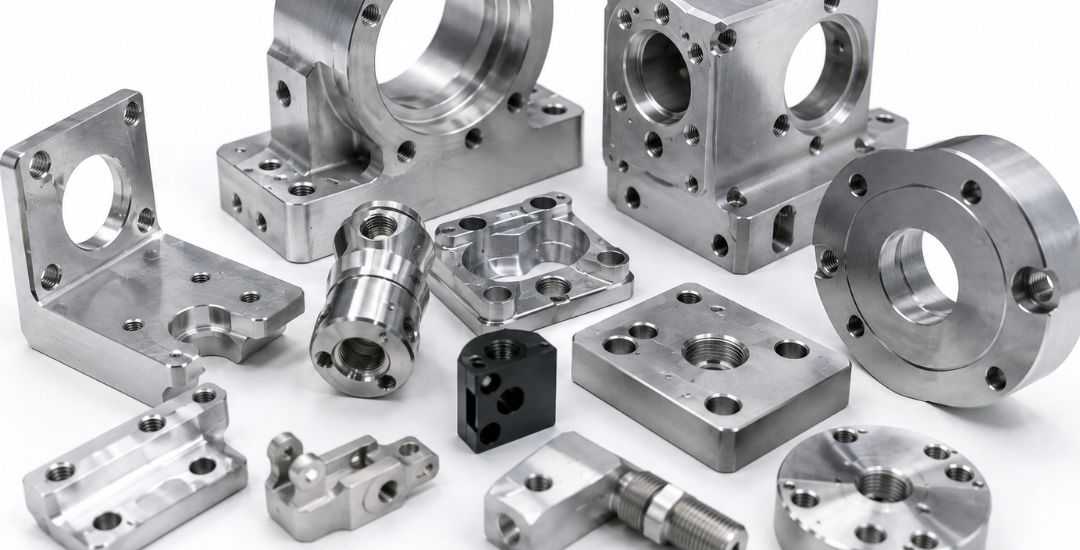
Although both thread types are widely used, certain industries tend to favor one over the other.
Common Applications for UNC Threads
UNC threads are commonly found in:
- Industrial machinery
- Structural assemblies
- Agricultural equipment
- Construction equipment
- General-purpose fastening systems
- Aluminum housings and brackets
These applications typically prioritize durability, assembly speed, and ease of maintenance.
Common Applications for UNF Threads
UNF threads are frequently used in:
- Automotive systems
- Аэрокосмические агрегаты
- Hydraulic equipment
- Precision mechanical devices
- Motion control systems
- High-vibration environments
These applications often require greater resistance to loosening and improved preload control.
7. Common Design Mistakes When Selecting Threads
Selecting the wrong thread type can create avoidable manufacturing and assembly problems.
Using Fine Threads in Soft Materials Without Evaluation
Designers sometimes assume that fine threads are always superior. In aluminum, magnesium, and some plastics, fine threads may increase the risk of thread stripping. Material properties should always be considered alongside thread specifications.
Assuming UNF Threads Are Always Stronger
Thread strength depends on multiple factors, including:
- Material strength
- Engagement length
- Fastener diameter
- Joint design
Fine threads often provide better preload characteristics, but that does not automatically make them stronger in every application.
Mixing UNC and UNF Components
UNC and UNF threads are not interchangeable. Even when the nominal diameter is identical, differences in pitch prevent proper engagement. Attempting to force assembly can permanently damage both internal and external threads.
Ignoring Thread Engagement Length
Many thread failures result from insufficient engagement rather than incorrect thread series selection. Proper engagement length should always be evaluated alongside thread type, particularly in softer materials.
8. Which Thread Type Should You Choose?
There is no universal answer. In general:
Choose UNC when:
- Fast assembly is important
- Frequent maintenance is expected
- Components are made from softer materials
- Manufacturing efficiency is a priority
- Production costs need to be minimized
Choose UNF when:
- Vibration resistance is critical
- Precise preload control is required
- Space constraints limit fastener size
- High-performance mechanical systems are involved
- Joint stability is a primary concern
The best choice depends on balancing engineering requirements with manufacturing considerations.
Заключение
The choice between UNC and UNF threads affects more than fastener compatibility. It influences machining efficiency, assembly speed, maintenance requirements, vibration resistance, and long-term reliability.
UNC threads are generally preferred when ease of machining, faster assembly, and improved performance in softer materials are important. UNF threads are often selected when greater preload control, improved vibration resistance, and compact designs are required.
Rather than selecting a thread series based solely on convention, engineers should evaluate thread specifications alongside material properties, loading conditions, manufacturing methods, and service requirements. This approach typically leads to more reliable assemblies and more efficient production outcomes. Need comprehensive guidance? Consult the Beska team.
 Russian
 English
 Hebrew
 Turkish
 French
 German
 Spanish
 Portuguese