


E-coating, also known as electrocoating or electrophoretic deposition, is a finishing process that uses electrical current to deposit paint onto conductive metal surfaces from a water-based bath. It is widely used in automotive, heavy equipment, and industrial manufacturing where corrosion resistance and uniform coverage on complex parts are required.
Unlike spray painting or порошковое покрытие, e-coating is an immersion process. The part is submerged in a bath, and an applied voltage drives charged paint particles onto the metal surface. As the coating builds, it naturally limits further deposition, producing a consistent film thickness even inside cavities and around corners.
Although the process is highly automated, coating quality depends on proper part design, surface pretreatment, and process control. This guide explains how e-coating works, its advantages and limitations, common applications, and the manufacturing considerations that engineers should understand before specifying it.
1. What Is E-Coating?
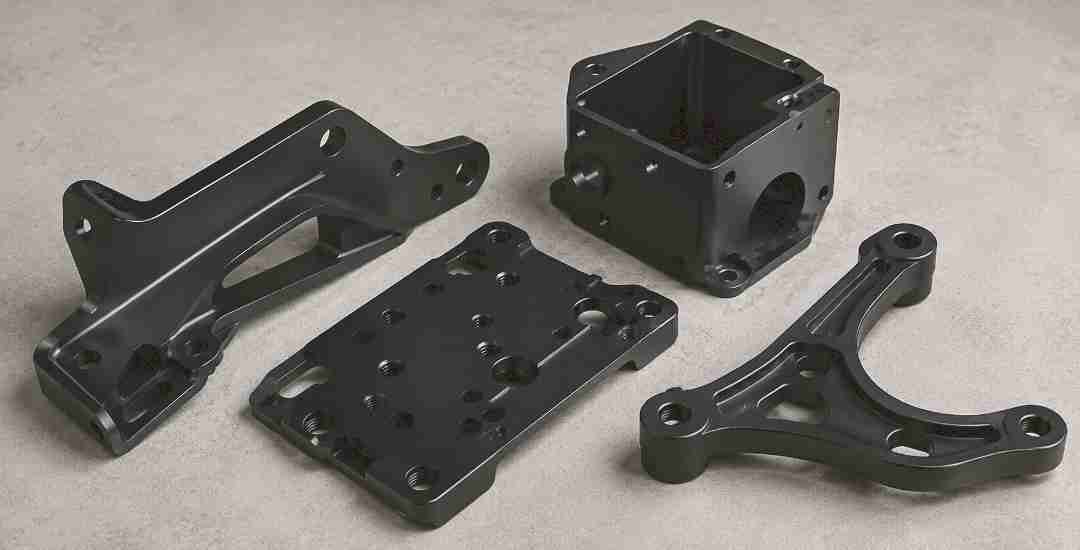
E-coating is a finishing process built around electrical attraction and controlled film growth. The coating does not simply cover the surface from the outside. Instead, charged paint particles move toward the metal part, attach to the surface, and gradually form an insulating layer.
This insulating layer is the key to how e-coating works. As the film becomes thicker, it reduces further electrical attraction in that area, so coating buildup naturally slows down. Areas with thinner coverage continue attracting paint particles for longer. This is why e-coating can create a more balanced film thickness than many conventional coating methods.
In simple terms, e-coating uses electricity to make the coating regulate itself. That self-limiting behavior is what makes the process useful for parts that need controlled, repeatable surface protection.
2. How Does the E-Coating Process Work?
Although e-coating is a highly automated process, the final coating quality depends on several carefully controlled stages. Each step affects the coating’s adhesion, thickness, corrosion resistance, and long-term durability. The e-coating process typically consists of four main steps: surface pretreatment, electrodeposition, post-rinse, and curing.
Surface Pretreatment
Surface pretreatment lays the foundation for the entire coating process. Parts must be thoroughly cleaned to remove oils, rust, and other contaminants before entering the e-coat bath. A typical pretreatment line includes alkaline cleaning, rinsing, and phosphate conversion coating to improve coating adhesion and corrosion resistance. Silicone contamination is particularly harmful—even trace amounts measured in parts per million can lead to coating defects or adhesion failure.
Electrodeposition
Electrodeposition is the core stage of the process. The cleaned parts are immersed in an e-coat bath, which typically consists of 80–90% deionized water and 10–20% paint solids. A DC voltage is then applied. In cathodic e-coating, the most widely used system, the part acts as the cathode and attracts positively charged paint particles. The applied voltage and deposition time determine the final coating thickness.
Post-Rinse
After deposition, the parts are rinsed to remove excess paint from the surface. An ultrafiltration system recovers unused paint solids and returns them to the bath, improving material utilization while reducing waste and operating costs.
Curing
The coated parts are then cured in a thermal oven, typically at 160–180°C for 20–30 minutes. During curing, the coating cross-links and hardens, allowing it to achieve its designed corrosion resistance, adhesion, and mechanical durability.
From an engineering perspective, surface pretreatment deserves the most attention during process planning. While bath chemistry and deposition parameters are carefully controlled, many coating defects can be traced back to inconsistent cleaning or surface preparation. A stable pretreatment process is often the foundation of a reliable e-coating line.
3. Types of E-Coating: Cathodic vs. Anodic
E-coating systems are generally divided into two categories: cathodic and anodic. While both use electrical current to deposit paint onto a metal surface, they differ in electrical polarity, coating performance, and typical applications.
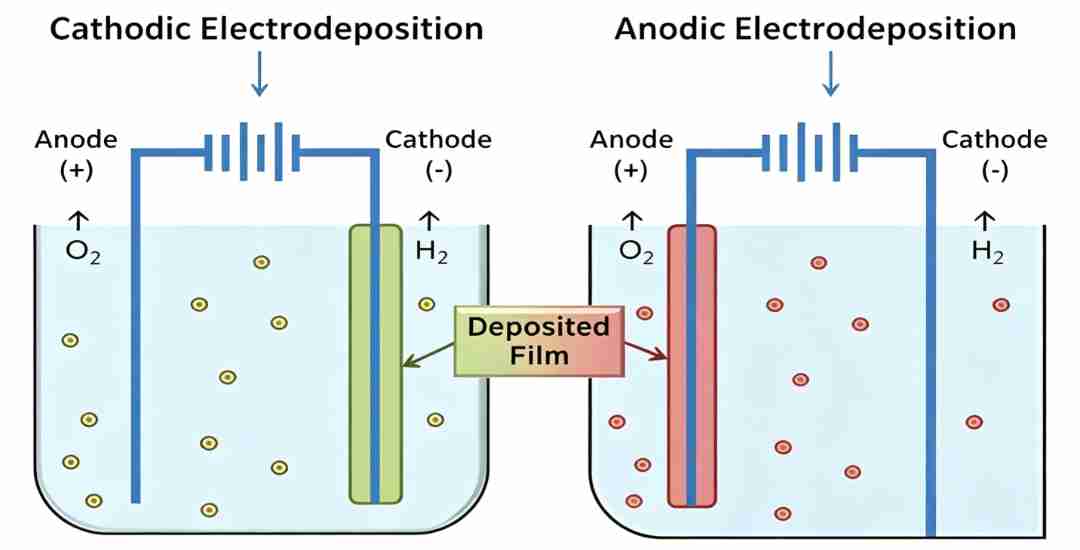
Cathodic E-Coating
Cathodic e-coating is the most widely used system in modern manufacturing. During deposition, the part acts as the cathode and attracts positively charged paint particles. This process produces a dense, durable coating with excellent corrosion resistance, making it the preferred choice for automotive components, heavy equipment, and other corrosion-critical applications.
Anodic E-Coating
In anodic e-coating, the part acts as the anode and attracts negatively charged paint particles. The process is generally more economical and offers good color and gloss control. However, acidic conditions at the metal-coating interface can reduce long-term corrosion resistance. Anodic systems are also less suitable for copper, brass, and silver-plated parts because of oxidation concerns.
For most structural and industrial applications, cathodic e-coating has become the industry standard due to its superior corrosion performance. Anodic systems are still used in applications where appearance, cost, or specific production requirements are more important than maximum corrosion resistance.
4. Key Advantages of E-Coating
E-coating is widely used because it provides consistent corrosion protection while improving manufacturing efficiency. Compared with conventional spray-applied finishes, it offers several practical advantages.
Uniform Coverage on Complex Geometries
Because the part is fully immersed, e-coating reaches internal cavities, box sections, tight seams, and tubular structures that spray processes often cannot cover effectively. This makes it an ideal choice for complex metal parts.
High Transfer Efficiency
E-coating typically achieves 95–98% paint utilization because unused paint remains in the bath instead of becoming overspray. This reduces material waste and helps keep production costs predictable.
Consistent Film Thickness
Coating thickness is controlled by the applied voltage and deposition time. Most production lines target 12.5–30 μm, with thicknesses of approximately 12–50 μm available depending on the application.
Excellent Corrosion Resistance
The dense, low-porosity coating provides long-term protection against moisture and corrosive environments. As a result, e-coating is widely used as a primer for automotive and other corrosion-critical applications.
Меньшее воздействие на окружающую среду
Modern e-coating systems use water-based coatings with low VOC emissions and high paint utilization. This helps reduce waste while supporting more environmentally responsible manufacturing.
Together, these advantages make e-coating a practical choice for high-volume production of complex metal parts that require consistent coating quality and reliable corrosion protection.
5. Common Limitations of E-Coating
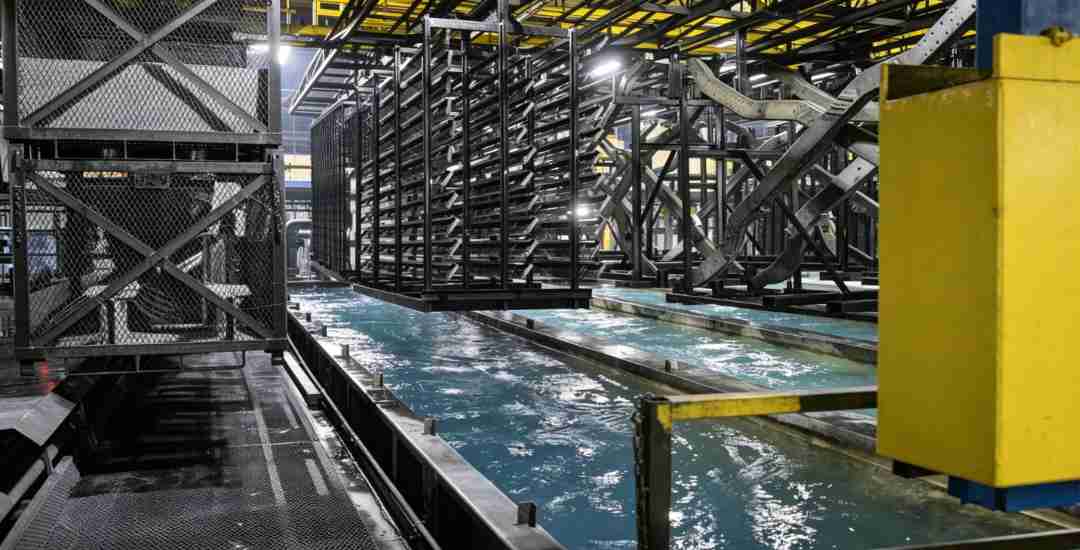
E-coating performs well in many industrial applications. It performs well for aluminum parts and many other substrates. However, there are certain situations when e-coating may not be the best solution.
Limited color choice
One immersion tank is typically dedicated to a single color. Changing colors requires draining and refilling the entire tank, which takes considerable time and wastes material. Most suppliers therefore offer a limited palette, usually black, gray, or primer.
Poor UV protection
Some e-coating materials, such as epoxy, have poor UV resistance and are prone to failure in outdoor conditions. This can be addressed by applying an additional topcoat. Epoxy-coated parts are often powder coated afterward to improve durability.
Inconsistency in color
Color appearance can vary depending on curing conditions. Parts that spend more time in the oven may look different from those with less exposure.
Defects from contamination
Even trace impurities can cause severe defects and compromise durability. Parts must be thoroughly inspected and cleaned before coating. Blind spots and sealed corners can trap air, leaving uncoated areas that become vulnerable to corrosion. This issue can be mitigated by orienting parts appropriately during immersion.
6. What Materials Can Be E-Coated?
E-coating can be applied to most electrically conductive metals, although the required pretreatment varies depending on the material. Proper surface preparation is essential to achieve good adhesion, corrosion resistance, and long-term coating performance. The table below summarizes the compatibility of common engineering materials with the e-coating process.
| Материал | Compatibility | Typical Considerations |
| Углеродистая сталь | Отличный | The most widely used substrate for automotive and industrial components. |
| Нержавеющая сталь | Хороший | Requires proper cleaning and surface activation before coating. |
| Алюминий | Хороший | Typically requires a conversion coating to improve adhesion and corrosion resistance. |
| Чугун | Хороший | Commonly used for heavy equipment and structural components. |
| Zinc-Plated Steel | Хороший | Compatible with appropriate pretreatment and process control. |
| Copper & Brass | Limited | Less common, particularly for anodic e-coating because of oxidation concerns. |
| Plastics & Ceramics | Not Suitable | The process requires an electrically conductive surface. |
Material compatibility is only one part of the process. Selecting the appropriate pretreatment for each substrate is equally important, as it has a direct impact on coating adhesion and long-term durability.
7. E-Coating vs. Powder Coating vs. Wet Paint
E-coating, powder coating, and wet paint all provide surface protection, but they differ in coating thickness, coverage, appearance, and production efficiency. The most suitable process depends on the part design, service environment, and performance requirements.
Свойство | Электронное покрытие | Порошковое покрытие | Wet Spray Paint |
Процесс | Immersion bath + thermal cure | Electrostatic spray + thermal cure | Spray gun + air dry or bake |
Typical Thickness | 15–30 μm | 60–120 μm | 20–80 μm |
Edge Coverage | Отличный | Хороший | Poor, thinner at edges |
Inside Tubes / Cavities | Yes, immersion covers everything | No, line of sight only | No, line of sight only |
Варианты цвета | Limited (black, gray, primer) | Any RAL/Pantone | Any color, metallics, custom |
Transfer Efficiency | 95–98% | High (overspray reclaimed) | Ниже |
Коррозионная стойкость | 500–1000+ hrs salt spray | 500–2000 hrs salt spray | 200–1000 hrs salt spray |
VOC Emissions | Very low | Zero | Moderate to high |
Capital Cost | Высокий | Умеренный | Низкий |
The best finishing process depends on the application rather than the coating itself. In practice, these methods are often selected to meet different performance, appearance, and production requirements, and they may also be used together within the same product.
Sources: Typical values compiled from publicly available industry references and manufacturer technical data sheets. Actual performance may vary depending on the coating system, pretreatment, substrate material, and test standard.
8. Common Applications of E-Coating
E-coating is widely used on metal components that require reliable corrosion protection and consistent coating coverage. It is especially suitable for high-volume production of complex parts.
Automotive Chassis and Suspension Components
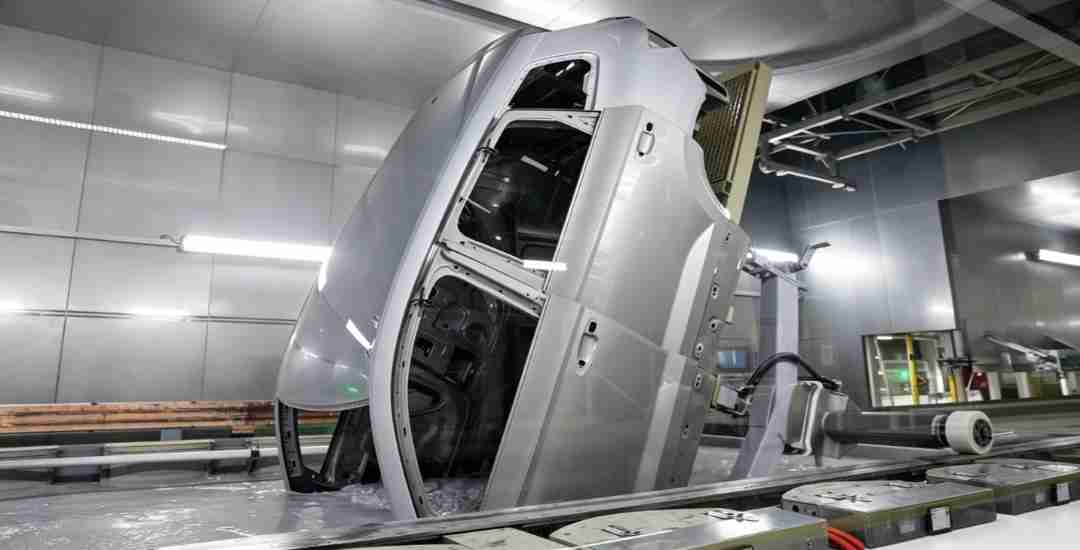
Chassis frames, suspension arms, engine cradles, and other welded automotive components are commonly e-coated to improve corrosion resistance. The process provides more uniform coverage on complex assemblies than conventional spray coatings.
EV Battery Trays and Enclosures
Battery trays, enclosure frames, and module support structures are often e-coated to protect against corrosion while maintaining consistent coverage across large metal surfaces. Coating thickness should also be considered when machining critical features before finishing.
Fasteners and Small Parts
E-coating is well suited to fasteners, clips, brackets, and other small components because large quantities can be coated efficiently with minimal impact on threads and recessed features. Proper fixturing helps improve coating consistency across high-volume production.
Regardless of the application, consistent coating quality depends on proper process control throughout the e-coating line.
9. Manufacturing Considerations Before E-Coating
The quality of an e-coated part depends not only on the coating process itself, but also on the way the part is designed and manufactured beforehand. Addressing these considerations early can help improve coating quality and reduce production issues.
Подготовка поверхности
A clean, consistent surface is essential for good coating adhesion. Oils, machining fluids, rust, and other contaminants should be removed before pretreatment, as even small amounts of residue can affect the final coating quality.
Геометрия детали
Although e-coating provides excellent coverage, enclosed cavities and poorly vented features can still trap air or process fluids during immersion. Adding drainage or vent holes where appropriate helps improve coating consistency.
Толщина покрытия
E-coating typically adds a thin but measurable film to every exposed surface. For precision holes, threaded features, or tight mating interfaces, the coating thickness should be considered during part design and machining.
Fixturing and Electrical Contact
Parts need reliable electrical contact throughout the coating process. At the same time, fixture locations should allow proper drainage and minimize visible contact marks on functional or cosmetic surfaces.
Considering these factors during the design and machining stages helps reduce coating defects and improves the consistency of the finished part.
10. When Is E-Coating the Right Choice?
The suitability of e-coating depends on the part design, performance requirements, and production volume. It performs particularly well in some applications, while other finishing processes may be a better fit in different situations.
Best Suited For
E-coating is often the preferred choice for parts with complex geometries, internal cavities, or welded assemblies where uniform corrosion protection is required. It is also well suited to high-volume production that benefits from consistent coating thickness and repeatable process control.
When Another Finish May Be Better
Powder coating or wet paint may be more suitable when custom colors are required, production volumes are low, parts cannot tolerate curing temperatures, or a thicker decorative finish is needed.
Our Engineering Approach
At Beska, we regularly machine parts that are later sent for e-coating through qualified finishing partners. During обработка, we consider factors such as sharp edges, drainage paths, blind holes, and machining allowances for coated surfaces. Addressing these details early helps reduce finishing issues and improves the consistency of the final coating.
Заключение
E-coating is not intended to replace every finishing process. It is most effective when complex metal parts require consistent corrosion protection, uniform coating coverage, and reliable performance in high-volume production.
Selecting the right surface finish involves more than comparing coating properties. Part geometry, production volume, appearance requirements, machining tolerances, and assembly needs should all be considered before a finishing process is specified.
В Беска, these factors are reviewed during the machining stage so that coating requirements are considered early in the manufacturing process. Proper planning helps reduce finishing issues, minimize rework, and improve the consistency of the final part.
Deeper into Our Resources
Для вашего содержательного чтения мы составили список рекомендуемых статей:
 Russian
 English
 Hebrew
 Turkish
 French
 German
 Spanish
 Portuguese