


Springs are used in suspensions, valves, electrical contacts, medical devices, and industrial machinery, but the steel behind them is not interchangeable. The wrong grade can lead to permanent set, fatigue cracking, or corrosion long before the spring reaches its intended service life.
Spring steel performance depends on more than tensile strength. Fatigue resistance, stress relaxation, forming requirements, operating temperature, and corrosion exposure can all affect which grade is suitable for a particular spring.
This article compares the main types of spring steel, their properties, applications, and manufacturing considerations. It also explains how to choose a grade based on the actual working conditions rather than a single value on a material data sheet.
1. What Is Spring Steel?
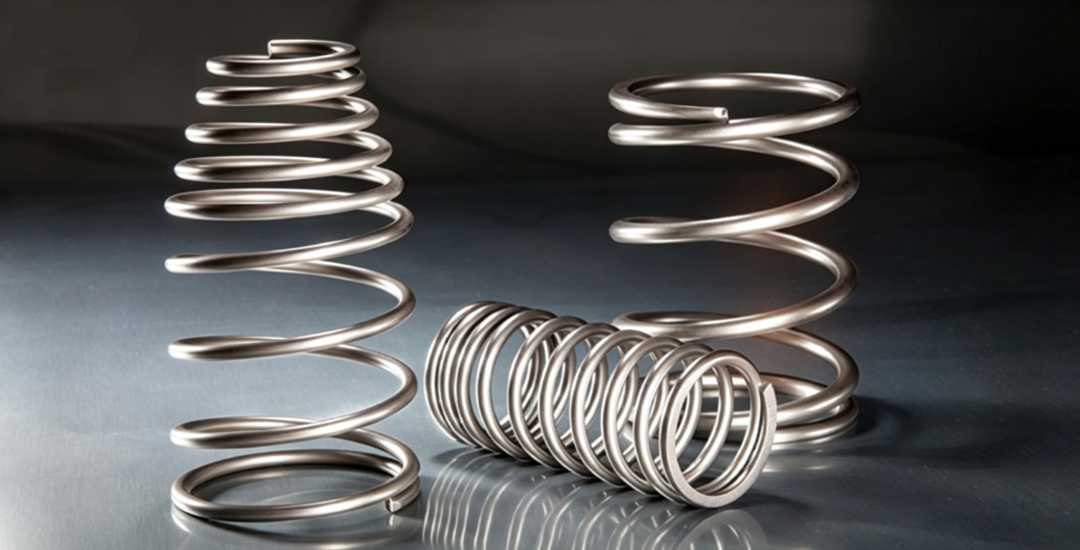
Spring steel refers to steels used for components that undergo repeated bending, twisting, or compression and need to return to their original shape after the load is removed. These materials are selected and processed to provide high yield strength, elastic performance, and resistance to permanent deformation.
Their final properties depend on the steel composition, processing condition, and heat treatment. Carbon content and alloying elements influence strength, hardenability, toughness, and other properties, while heat treatment develops the mechanical properties required for the finished spring.
Different spring steel grades offer different combinations of strength, fatigue resistance, temperature capability, corrosion resistance, and formability. These differences are the basis for the main types of spring steel discussed below.
2. Types of Spring Steel: High-Carbon, Alloy, Stainless
Spring steels can be grouped into three broad categories: high-carbon, alloy, and stainless spring steels. The differences in composition and processing give each group a different balance of strength, hardenability, toughness, corrosion resistance, and formability.
| Категория | Common Grades | Основные характеристики | Типичные применения |
| High-Carbon Spring Steel | 1074, 1080, 1095 | High strength, good elastic properties, relatively low material cost | Flat springs, clips, retaining parts, spring strips |
| Alloy Spring Steel | 5160, 9260 | Greater hardenability and toughness, suitable for heavier sections and demanding cyclic loads | Coil springs, heavy-duty springs, automotive and industrial spring components |
| Stainless Spring Steel | 301, 302, 17-7PH | Corrosion resistance with useful spring properties and different strengthening options | Medical components, electrical contacts, marine and corrosion-exposed springs |
High-carbon spring steels are commonly used when strength and cost are the main priorities. Alloy grades are better suited to applications that require greater hardenability, toughness, or performance under demanding mechanical conditions, while stainless grades are selected when corrosion resistance is a major requirement.
3. Key Properties Compared: Strength, Fatigue, Temperature, and Relaxation
Spring steel selection involves more than maximum strength. Fatigue loading, operating temperature, corrosion exposure, section size, and heat treatment can all affect how a grade performs in service.
| Свойство | High-Carbon Spring Steel | Alloy Spring Steel | Stainless Spring Steel |
| Сила | High strength can be achieved through carbon content and heat treatment | High strength with good hardenability, including thicker sections | Varies significantly by grade and strengthening condition |
| Fatigue Performance | Suitable for many cyclic applications when properly processed | Commonly used for demanding cyclic and heavy-duty applications | Depends strongly on grade, condition, and surface quality |
| Elevated-Temperature Performance | More limited where stress relaxation becomes important | Certain grades provide better performance at elevated temperatures | Highly grade-dependent; some grades retain useful properties at elevated temperatures |
| Коррозионная стойкость | Usually requires surface protection in corrosive environments | Usually requires surface protection | Main advantage over carbon and alloy spring steels |
| Hardenability | More limited in thicker sections | Generally better, making alloy grades useful for larger sections | Depends on grade and strengthening mechanism |
| Relative Cost | Generally lower | Generally moderate | Generally higher |
No category is strongest in every area. High-carbon steels are widely used where strength and cost are important, alloy grades become useful when hardenability, toughness, or demanding service conditions matter, and stainless grades are favored when corrosion resistance is a priority.
4. Applications and Industry Use: Automotive, Aerospace, Medical, and More
Different spring steel grades are used across automotive, aerospace, medical, electrical, and industrial applications. The material choice depends on the load cycle, operating environment, temperature, corrosion exposure, and spring geometry.
Автомобильный
Automotive springs include suspension components, valve springs, clutch springs, retaining parts, and other repeatedly loaded components. Fatigue resistance, toughness, and consistent mechanical properties are important because many of these parts operate under continuous cyclic loading. High-carbon and alloy spring steels are both used, depending on the spring size, load, and operating conditions.
Аэрокосмическая промышленность
Springs used in aerospace systems may face demanding combinations of cyclic loading, temperature variation, corrosion exposure, and weight restrictions. Material selection therefore depends heavily on the specific operating environment. Grades such as 17-7PH stainless steel can be used where both strength and corrosion resistance are important.
Медицинские приборы
Spring components are used in surgical instruments, drug-delivery devices, diagnostic equipment, and other medical products. Where springs are exposed to moisture, cleaning agents, body fluids, or sterilization processes, corrosion resistance becomes particularly important. Stainless spring steels such as 301 and 17-7PH are among the options used, depending on the mechanical and environmental requirements.
Industrial and General Applications
Industrial equipment uses spring steel in valves, electrical contacts, clips, retaining parts, machinery, and many other components. High-carbon spring steels are widely used where high strength and economical production are important, while alloy or stainless grades may be selected when additional toughness, hardenability, temperature performance, or corrosion resistance is required.
The application does not determine the grade by itself. Two springs used in the same industry may require different materials because their loads, environments, dimensions, and expected service conditions are different.
5. Manufacturing Considerations for Spring Steel
Spring performance depends not only on material grade, but also on forming, heat treatment, and surface condition. These processes affect dimensional stability, fatigue performance, corrosion resistance, and the final properties of the spring.
Cold Coiling vs. Hot Coiling
Cold and hot coiling are used for different material conditions, section sizes, and spring geometries. Cold coiling is commonly used for smaller wire and sections that can be formed without heating, while hot coiling is more suitable for larger or more difficult-to-form sections.
| Comparison | Cold Coiling | Hot Coiling |
| Typical Use | Smaller wire and sections | Larger or more difficult-to-form sections |
| Forming Condition | Formed without heating to hot-forming temperatures | Material is heated before forming |
| Распространенные материалы | High-carbon, stainless, and some alloy spring steels | Commonly used for larger alloy steel springs |
| After Forming | Stress relieving or other treatment may be required depending on material condition | Heat treatment is generally used to develop the required final properties |
The choice between cold and hot coiling depends on the steel grade, section size, spring geometry, required properties, and available forming equipment. There is no single wire diameter that separates the two processes.
Термическая обработка
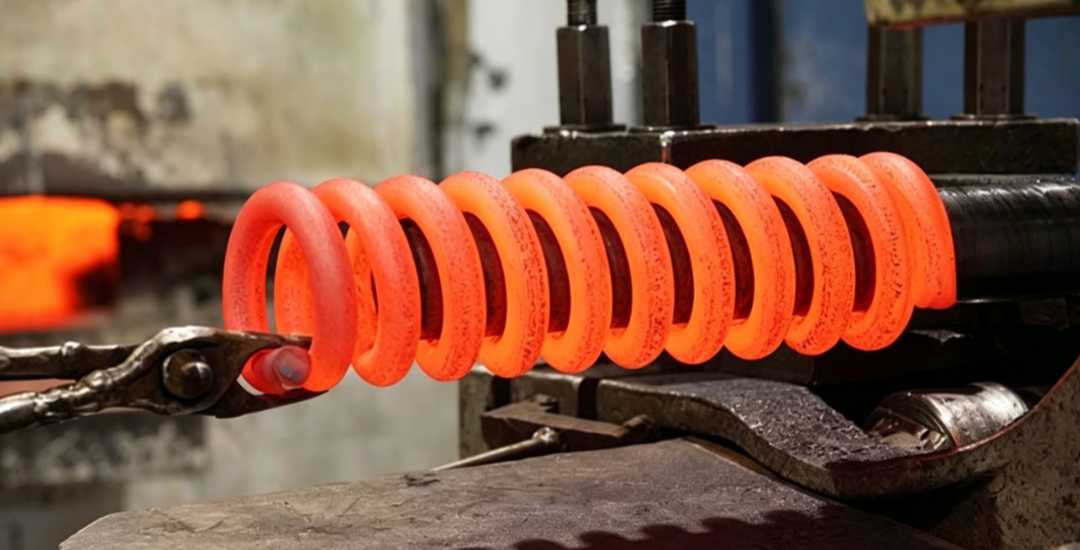
Heat treatment depends on the spring steel grade, supplied condition, and forming process. Some springs require quenching and tempering after forming, while springs made from pre-hardened or cold-worked wire may only require stress relief.
Alloy spring steels may use quench-and-temper processing to develop the required strength and toughness. Precipitation-hardening stainless grades such as 17-7PH follow a different heat-treatment route. The material condition and forming process should therefore be considered together when defining the final heat treatment.
Дробеструйная обработка
Shot peening is commonly used to improve the fatigue performance of highly stressed springs. The process introduces compressive residual stress at the surface, helping reduce the likelihood of fatigue cracks initiating and propagating from surface defects.
Its effectiveness depends on factors such as material condition, surface quality, peening intensity, coverage, and the stresses the spring experiences in service.
Surface Treatment and Hydrogen Embrittlement
Carbon and alloy spring steels may require additional surface protection when used in corrosive environments. Zinc plating, phosphate coatings, and organic coatings are among the options available, but the appropriate treatment depends on the required corrosion resistance, dimensional requirements, and spring material.
Electroplating requires particular attention when used on high-strength spring steels. Hydrogen introduced during acid cleaning, pickling, or plating can contribute to embrittlement and delayed cracking when the spring is under stress.
For susceptible materials, surface preparation, plating control, and post-plating embrittlement-relief treatment should follow the applicable material, coating, and customer specifications. The required treatment depends on the steel strength, coating process, and part geometry rather than one standard cycle for every spring.
Material selection and manufacturing process should therefore be considered together. The same spring steel grade can perform differently depending on how it is formed, heat-treated, finished, and protected from corrosion.
6. Spring Steel Material Forms, Supply Conditions, and Procurement
Spring steel is supplied in different forms and material conditions, and the grade alone does not fully define what you are purchasing. The same nominal grade may be supplied in different conditions, which affects its formability, mechanical properties, and the processing required to produce the finished spring.
| Material Form | Common Supply Conditions | Typical Spring Applications |
| Wire | Annealed, cold-drawn, oil-tempered, or other specified conditions | Coil springs, torsion springs, wire forms |
| Strip / Sheet | Annealed, cold-rolled, hardened and tempered, depending on grade | Flat springs, clips, retaining parts |
| Bar / Rod | Hot-rolled, annealed, or heat-treated conditions | Larger-section springs and components |
When ordering spring steel, specify the grade, material form, supply condition, dimensions, and applicable material standard rather than relying on the grade name alone. Availability can also vary by size and supplier, so uncommon combinations should be confirmed before the material is finalized on the drawing or purchase order.
7. How to Choose the Right Spring Steel Grade
Spring steel selection starts with the spring’s mechanical requirements and operating conditions. Load, fatigue life, temperature, corrosion exposure, section size, and forming method all influence which grade is suitable.
Температура и окружающая среда
Operating temperature can affect strength and stress relaxation, so a grade should be evaluated under the actual service temperature and load rather than by room-temperature properties alone. Corrosion exposure is also important. Stainless spring steels are useful where inherent corrosion resistance is required, while coated carbon or alloy steels may be suitable in other environments.
Size and Forming Method
Section size, material condition, and spring geometry affect whether cold or hot forming is practical. Larger or more difficult-to-form sections may favor hot forming, while smaller wire and strip are commonly formed cold. The selected grade and supply condition should be compatible with the intended forming process.
Fatigue Requirements
For springs under repeated cyclic loading, fatigue performance should be considered together with the expected stress range, required service life, surface condition, and heat treatment. Material selection alone does not determine fatigue life, so manufacturing and finishing requirements should be considered at the same time.
Making the Final Selection
There is no fixed order for selecting a spring steel grade. Start with the requirements that are most critical to the application, then eliminate materials that cannot meet them. The final choice should balance mechanical performance, operating environment, manufacturability, material condition, and cost.
Заключение
Choosing a spring steel grade depends on how the spring will actually be used. Load, fatigue requirements, operating temperature, corrosion exposure, section size, forming method, and material condition can all affect the final choice. High-carbon, alloy, and stainless spring steels each offer different advantages, so no single category is suitable for every application.
The best approach is to identify the most critical service requirements first, then compare grades that can meet them while remaining practical to form, heat-treat, and finish. Considering the material and manufacturing process together helps avoid selecting a grade that looks suitable on a data sheet but creates problems during production or service.
Deeper into Our Resources
Для вашего содержательного чтения мы составили список рекомендуемых статей:
- Типы инструментальной стали
- Surface Roughness vs Surface Finish
- Heat-Resistant Metals for CNC Machining
 Russian
 English
 Hebrew
 Turkish
 French
 German
 Spanish
 Portuguese