


A rubber seal, silicone pad, or flexible plastic may look identical from the outside but feel and perform very differently depending on its hardness. Durometer testing provides a quick way to compare that indentation hardness using standardized Shore scales.
The result is only useful when the correct scale and test conditions are used. Shore A, Shore D, and softer scales apply different indenter geometries and spring forces, so a reading cannot be interpreted independently of the scale used. Specimen thickness, temperature, surface condition, and test technique can also affect the result.
1. What Is Durometer?
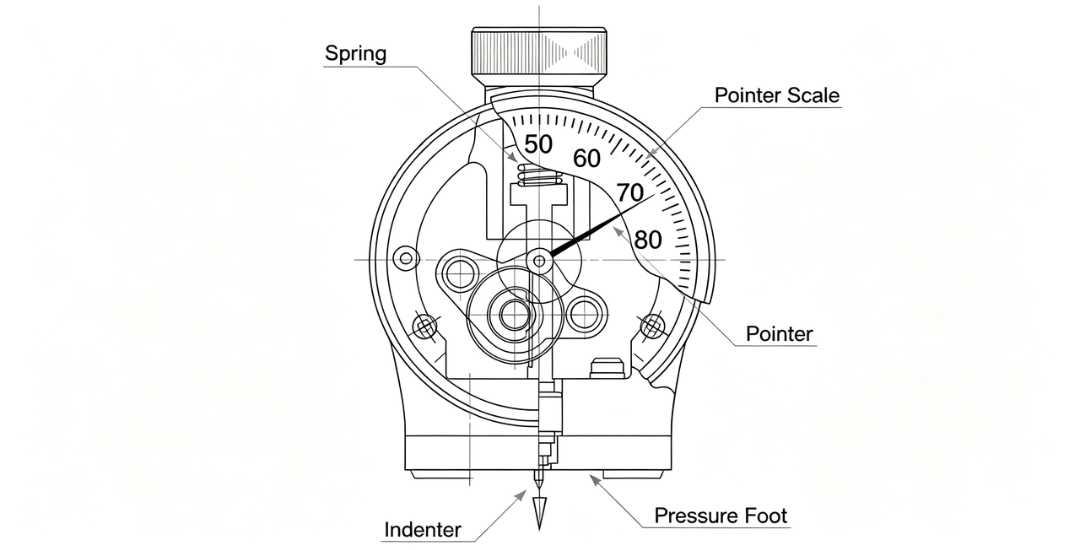
A durometer is an instrument used to measure the indentation hardness of materials such as rubber, elastomers, and many plastics. Shore durometer testing is commonly performed under standards such as ASTM D2240, which defines different scales for materials with different hardness ranges.
A durometer reading is reported on a scale from 0 to 100 together with the Shore type, such as Shore A or Shore D. A higher reading means the indenter penetrates less deeply into the material under the specified test conditions.
In engineering practice, the word durometer may refer either to the measuring instrument or, informally, to the hardness value itself. For example, a silicone part described as “70A durometer” means that its hardness is approximately 70 Shore A, not that 70 is a universal hardness value independent of the scale.
2. How Does a Durometer Work?
A durometer measures hardness by pressing a spring-loaded indenter into the surface of a material. The amount of penetration is converted into a shore hardness reading from 0 to 100.
The relationship is straightforward: deeper penetration produces a lower hardness reading, while shallower penetration produces a higher reading. A soft silicone or rubber allows the indenter to travel farther into the surface, whereas a harder plastic resists penetration and produces a higher value.
Different Shore scales use different indenter shapes and spring forces so they can measure materials across different hardness ranges. This is why a Shore A reading and a Shore D reading cannot be treated as the same measurement even when the numerical value is similar.
3. Common Shore Durometer Scales
Different shore scales are designed for different material hardness ranges. A scale that works well for soft silicone may give poor discrimination on a rigid plastic, so the scale should match the material rather than be selected by habit.
| Shore Scale | Typical Materials | General Use |
| Shore OO / O | Soft foams, gels, very soft elastomers | Very soft and highly compressible materials |
| Shore A | Rubber, silicone, ТПЭ, flexible polyurethane | General-purpose elastomers and flexible polymers |
| Shore D | Hard rubber, rigid polyurethane, harder plastics | Rigid and semi-rigid polymer materials |
Shore OO / O
Shore OO and Shore O use lighter test forces than Shore A and D and are intended for very soft materials. They are commonly used for foams, gels, soft cushioning materials, and low-hardness elastomers that would be difficult to differentiate accurately on a harder Shore scale.
Shore A
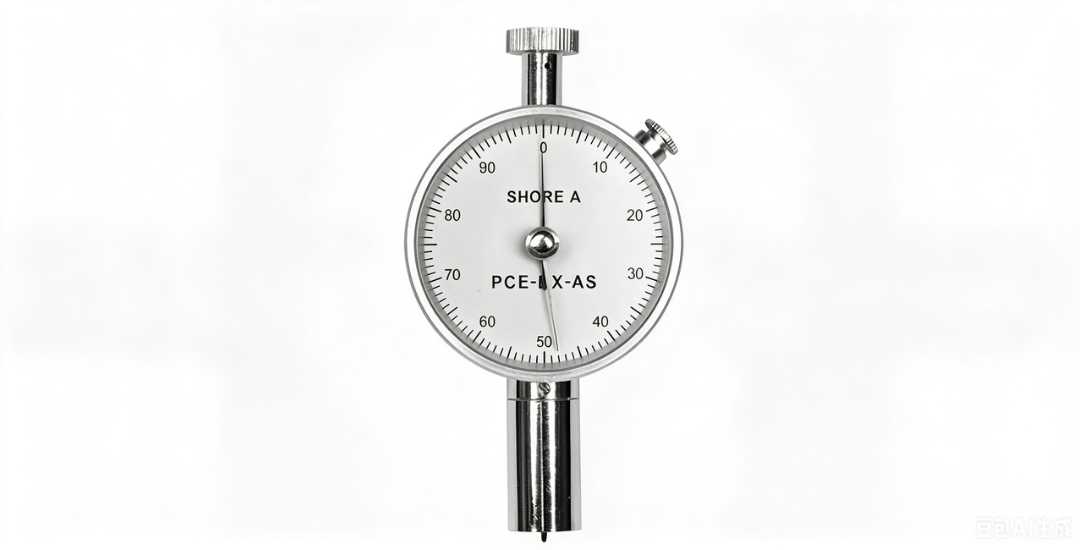
Shore A is the most familiar scale for general rubber and elastomer testing. It is commonly used for silicone seals, rubber gaskets, TPE grips, flexible polyurethane, and similar materials.
A Shore A value should always be reported together with the scale, such as 60 Shore A or 80 Shore A.
Shore D
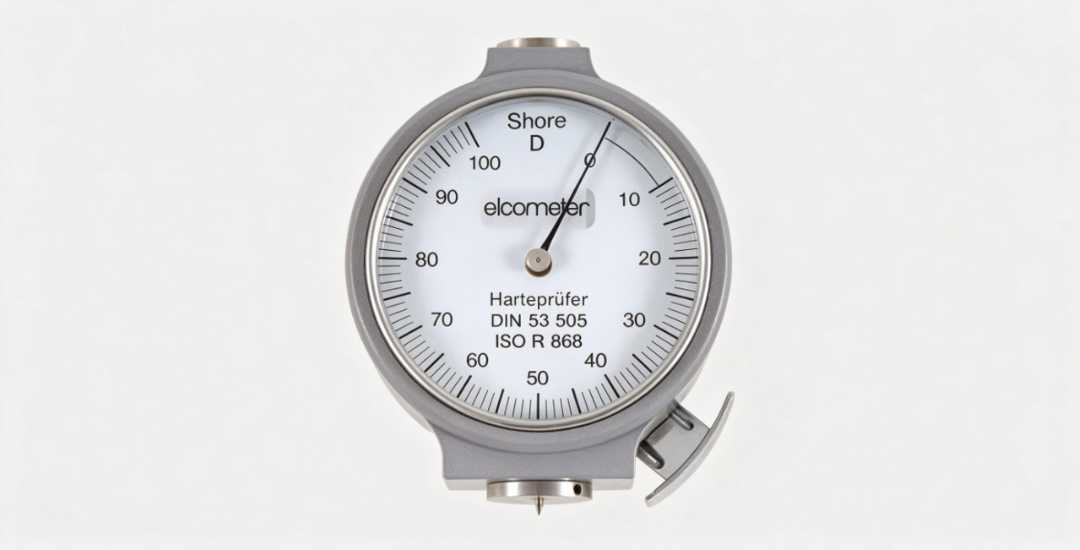
Shore D is intended for harder materials that produce very high readings on Shore A. Typical examples include hard rubber, rigid polyurethane, and many harder thermoplastics.
A value such as 70 Shore D cannot be compared directly with 70 Shore A, because the two scales use different indenter geometries and spring forces.
4. How to Measure Durometer Hardness Correctly
A durometer is simple to use, but reliable hardness readings depend on consistent test conditions. Differences in scale selection, specimen preparation, temperature, and testing technique can all change the amount of indentation and make results difficult to compare.
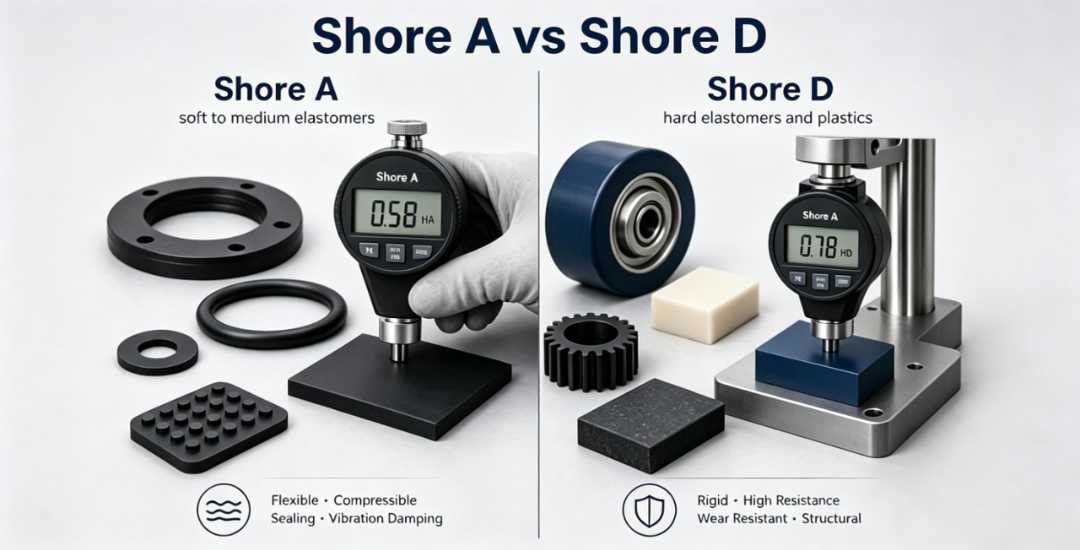
Choose the Correct Shore Scale
The Shore scale should match the approximate hardness of the material. Using a scale that is too soft or too hard for the specimen may produce readings near the extreme ends of the scale, where differences between materials become harder to distinguish.
Check Specimen Thickness
The specimen must be thick enough to prevent the supporting surface underneath from influencing the indentation. For common Shore A testing, a specimen thickness of about 6 mm is often used as a standard reference.
Thin specimens require particular care. If multiple layers are used to obtain sufficient thickness, they should be prepared according to the applicable test method and placed together without gaps that could affect the reading.
Keep Temperature Consistent
Elastomers and flexible polymers can change stiffness with temperature. A rubber part tested immediately after heating or cooling may therefore produce a different hardness reading from the same material tested under controlled room conditions.
For meaningful comparisons between samples or production batches, specimens should be tested under consistent temperature conditions.
Use a Flat, Clean Surface
The durometer should contact a flat and representative area of the specimen. Rough surfaces, molding features, contamination, or strongly curved areas can prevent uniform contact and increase variation between readings.
The test surface should therefore be clean and suitable for stable contact with the instrument.
Keep the Durometer Perpendicular
The indenter should approach the material perpendicular to the test surface, with the presser foot making proper contact. Tilting or uneven hand pressure changes the loading condition and can reduce repeatability.
For frequent or more controlled testing, a durometer stand can help maintain more consistent alignment and applied pressure.
Use a Consistent Reading Time
Many elastomers continue to deform after the indenter first contacts the surface, so the displayed hardness value may change slightly with time. Readings taken immediately should not be compared directly with readings recorded after a longer dwell period.
Whatever test time is specified, it should remain consistent when comparing materials, samples, or production batches.
Take Multiple Readings
A single measurement may not represent the entire specimen. Material variation, local surface conditions, and operator technique can all influence one test point.
Taking several readings at separate locations provides a more representative picture of the material’s hardness and makes unusual individual results easier to identify.
The important point is consistency. Shore hardness values are most useful when the same scale, specimen conditions, temperature, surface preparation, alignment, and reading method are maintained throughout the comparison.
5. How to Choose the Right Shore Scale
The easiest way to choose a shore scale is to start with the general stiffness and material type. Softer, more compressible materials require scales with lighter test forces, while harder materials need scales designed to provide better differentiation at higher hardness levels.
| Тип материала | Common Shore Scale |
| Soft foam, gel, very soft elastomers | Shore OO / O |
| Silicone, rubber, TPE | Shore A |
| Flexible polyurethane | Shore A |
| Hard rubber | Shore D |
| Rigid polyurethane | Shore D |
| Harder thermoplastics | Shore D |
This table should be treated as a starting point rather than a universal rule. Material formulation, density, and actual hardness can move a material toward another suitable Shore scale.
The reading itself can also provide a useful indication. If a material consistently produces values near the upper or lower end of the selected scale, another Shore scale may provide better discrimination.
For engineering drawings and quality specifications, the Shore type should always be stated together with the hardness value. Writing 70 Shore A, for example, is much more meaningful than specifying only 70, because the number cannot be interpreted independently of the scale.
6. What Durometer Readings Can and Cannot Tell You
A durometer reading is useful for comparing the indentation hardness of elastomers, rubber, and many plastics, but it does not describe the complete mechanical performance of a material.
Two materials can have similar Shore hardness values while behaving very differently in service. Their tensile strength, tear resistance, compression set, wear resistance, flexibility, and long-term durability may still vary significantly.
For example, two rubber compounds may both measure 70 Shore A but respond differently under repeated compression, abrasion, or tensile loading. Shore hardness should therefore be treated as one material property rather than a complete indicator of overall performance.
Durometer readings are most useful for:
- comparing the relative hardness of similar materials
- checking consistency between production batches
- confirming whether a material falls within a specified Shore hardness range
- monitoring changes in hardness after processing or aging
They should not be used alone to predict tensile strength, wear life, sealing performance, or resistance to permanent deformation.
Shore values from different scales also cannot be directly converted. A value such as 70 Shore A does not correspond to a fixed Shore D value because each scale uses a different indenter geometry and spring force. Any comparison between Shore scales should therefore be treated as approximate unless the material has been tested directly on both scales.
Заключение
Durometer hardness is a simple but useful specification when a project involves rubber, silicone, TPE, polyurethane, or other flexible polymer components. It is commonly used for parts such as seals, gaskets, pads, grips, wheels, and soft-touch components where material hardness can affect fit, sealing, cushioning, or wear behavior.
When these parts are used together with CNC-machined metal or plastic components, the hardness requirement should be clearly defined alongside material, dimensions, and tolerances. Beska supports Обработка на станках с ЧПУ, prototyping, sheet metal fabrication, and mechanical assembly for custom parts. If your project includes a specific Shore hardness or material requirement, send us your drawing for review.
 Russian
 English
 Hebrew
 Turkish
 French
 German
 Spanish
 Portuguese