


Алюминий is lightweight, easy to machine, and offers an excellent strength-to-weight ratio. The challenge is that its surface is relatively soft, which can limit wear resistance, corrosion performance, and durability in demanding environments.
Ceramic coating addresses many of these limitations. Processes such as plasma electrolytic oxidation (PEO) and micro-arc oxidation (MAO) create a hard ceramic layer that becomes part of the aluminum surface rather than simply sitting on top of it.
In this guide, we’ll explain how ceramic coating on aluminum works, which alloys are best suited to the process, where it is commonly used, how it compares with anodizing, and the key factors to consider before selecting it.
1. What Is Ceramic Coating on Aluminum?
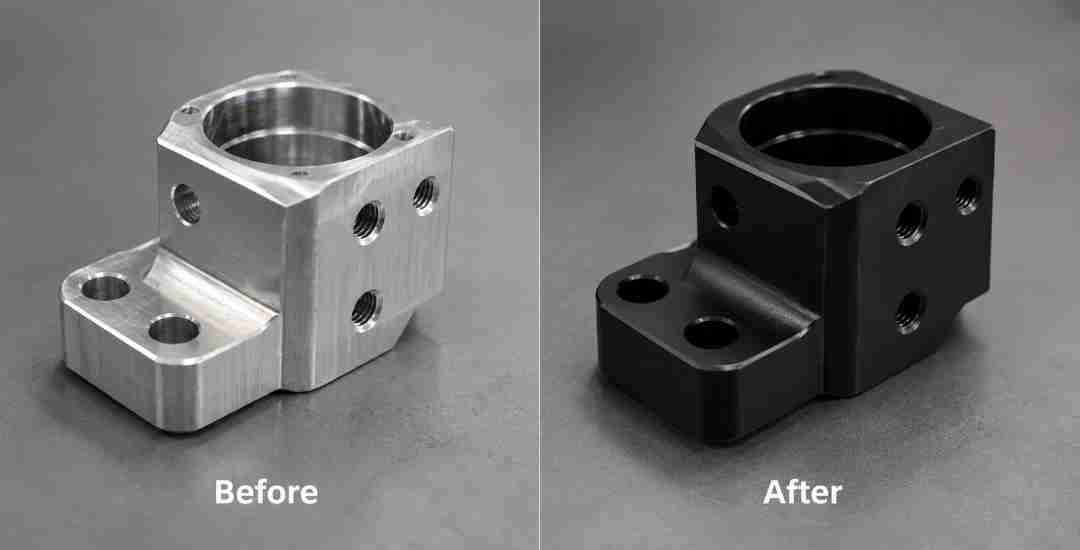
Ceramic coating on aluminum is a surface treatment that converts the outer surface of aluminum into a hard ceramic layer. Unlike paint, порошковое покрытие, or thermal spray coatings, the layer is formed through an electrochemical process rather than being applied on top of the material.
The most common industrial method is plasma electrolytic oxidation (PEO), also known as micro-arc oxidation (MAO). During the process, the aluminum part is immersed in an electrolyte bath and subjected to high voltage. Micro-plasma discharges form on the surface, creating a ceramic oxide layer that becomes integrated with the substrate.
Because the coating grows from the aluminum itself, it offers significantly better wear resistance, corrosion protection, and high-temperature performance than many conventional surface treatments.
2. Key Properties of Ceramic-Coated Aluminum
Ceramic coatings dramatically change the surface properties of aluminum. The following table summarizes the typical performance achievable with a PEO/MAO coating.
| Свойство | Typical Value |
| Твёрдость | Up to 2,400–2,500 HV |
| Теплостойкость | High-temperature thermal protection |
| Salt Spray Corrosion Resistance | Over 2,000 hours |
| Толщина покрытия | 8–200 µm, adjustable |
| Коэффициент трения | As low as 0.14 |
Твёрдость
A PEO coating can reach 2,400–2,500 HV on the Vickers scale. That is roughly three times the hardness of heat-treated steel and significantly harder than hard chrome coatings. Even at more moderate levels, MAO coatings typically reach around 1,400 HV, compared with approximately 75 HV for untreated aluminum.
Износостойкость
The ceramic layer provides excellent protection against abrasion and sliding wear. The coefficient of friction against bearing steel can be as low as 0.14, helping reduce surface damage in moving assemblies.
Теплостойкость
The ceramic layer remains stable at temperatures far beyond the limits of untreated aluminum and acts as a thermal barrier that helps protect the substrate from localized heat exposure.
Коррозионная стойкость
PEO coatings have demonstrated more than 2,000 hours of salt spray corrosion resistance under controlled test conditions. The dense ceramic layer helps prevent corrosive media from reaching the aluminum substrate.
Coating Structure
The coating typically consists of a dense inner layer that provides most of the wear and corrosion protection, along with a more porous outer layer that can retain lubricants or support additional surface treatments.
Together, these properties help aluminum components withstand wear, corrosion, and elevated temperatures that would quickly damage untreated surfaces.
3. Benefits of Ceramic Coating on Aluminum

The value of ceramic coating comes from more than just higher hardness. In many applications, the combination of wear resistance, corrosion protection, and thermal performance allows aluminum components to operate in environments that would quickly damage untreated surfaces.
Longer Service Life
The combination of hardness, wear resistance, and corrosion protection can significantly extend the service life of aluminum components in demanding operating conditions.
Lightweight Durability
Ceramic coating makes it possible to use lightweight aluminum in applications where surface wear would otherwise require steel or other harder materials. This can reduce weight without sacrificing surface performance.
Thermal and Electrical Protection
The ceramic layer acts as both a thermal barrier and an electrical insulator. This makes it suitable for components exposed to elevated temperatures or applications where electrical isolation is required.
Process Flexibility
PEO/MAO coatings can be applied to a wide range of aluminum alloys, and coating thickness can be adjusted to meet different performance requirements. The process is also suitable for many complex part geometries.
These advantages explain why ceramic coating is increasingly considered for applications where untreated aluminum reaches its performance limits.
4. Limitations of Ceramic Coating on Aluminum
In practice, the decision is rarely based on performance alone. Manufacturing constraints, dimensional requirements, and overall project cost can be just as important as hardness or corrosion resistance.
Thermal Expansion Mismatch
Aluminum expands more than ceramics when heated, which can create stress within the coating system during thermal cycling. In some applications, this may increase the risk of cracking.
Higher Processing Cost
PEO/MAO is generally more expensive than anodizing or painting. The equipment, process control, and cycle times all contribute to the additional cost. For some applications, the performance benefits justify the investment; for others, they may not.
Coating Thickness and Tolerance Control
Ceramic coatings add thickness to the surface, typically between 8 and 200 µm. On precision bores, bearing seats, sealing surfaces, and threaded features, this additional thickness can affect fit and function if not considered during the design stage.
Geometry Limitations
While PEO/MAO works well on many complex shapes, internal surfaces of long, narrow tubes and deep cavities can be difficult to coat uniformly. Some geometries may require specialized fixturing or process adjustments.
Post-Coating Machining Challenges
The ceramic layer is extremely hard. If machining is required after coating, operations such as threading, boring, or finishing may require diamond tooling or grinding rather than conventional cutting tools.
None of these limitations automatically rule out ceramic coating, but they do influence whether it is the most practical solution for a particular application.
5. Which Aluminum Alloys Work Best With Ceramic Coating?
Most aluminum alloys can be ceramic coated, but the coating growth rate, surface quality, and final performance are not identical across all grades. Alloy composition, particularly silicon and copper content, can influence how the ceramic layer forms during the PEO/MAO process.
| Alloy | Пригодность | Примечания |
| 6061 | Отличный | One of the most commonly coated alloys; provides consistent coating growth and good overall performance. |
| 7075 | Отличный | Frequently used where high strength and wear resistance are required. |
| 2024 | Хороший | Can be coated successfully, although copper content may influence corrosion behaviour. |
| A356 (Cast Aluminum) | Good with Process Adjustment | Higher silicon content may require modified process parameters to achieve uniform coating quality. |
Among these alloys, 6061 and 7075 are the most common choices for ceramic coating. Both respond well to PEO/MAO processing and are widely used in aerospace, automotive, robotics, and industrial equipment.
Cast aluminum alloys such as A356 can also be ceramic coated, but they often require adjustments to electrolyte chemistry and electrical parameters. The higher silicon content can affect coating growth and surface appearance compared with wrought aluminum alloys.
For critical applications, alloy selection should be considered alongside coating requirements. A coating process that performs well on 6061 may not produce identical results on a high-silicon casting alloy, even when the same equipment and process settings are used.
6. Common Applications of Ceramic-Coated Aluminum
Ceramic-coated aluminum appears in a wide range of industries where weight, wear resistance, corrosion protection, or thermal performance are important. While the exact requirements vary from one application to another, the goal is usually the same: extending component life without giving up the advantages of aluminum.
Автомобильный
In the automotive industry, ceramic-coated aluminum is used in components exposed to heat, wear, and friction. Examples include piston crowns, engine components, brake system parts, and lightweight structural components. The ceramic layer helps improve wear resistance and thermal protection while preserving aluminum’s weight advantage.
Аэрокосмическая промышленность
Aerospace applications often involve aluminum alloys such as 2024 and 7075, where low weight and high durability are both critical. Ceramic coatings improve wear and corrosion resistance without significantly increasing component weight. They are commonly considered for structural parts, actuators, and components exposed to harsh operating environments.
Морской
Marine environments are highly corrosive due to constant exposure to saltwater and humidity. Ceramic-coated aluminum components can provide improved corrosion resistance while remaining lighter than stainless steel alternatives. Typical applications include marine equipment, housings, brackets, and fastening systems where weight reduction is important.
Промышленное оборудование
Industrial equipment frequently uses ceramic-coated aluminum for rollers, pump components, robotic systems, automation equipment, and parts exposed to abrasive conditions. The coating helps extend service life by reducing wear and protecting surfaces from corrosion and chemical exposure.
Across these applications, ceramic coating is typically selected when untreated aluminum can no longer meet the wear, corrosion, or temperature requirements of the operating environment.
7. Ceramic Coating vs. Anodizing
Ceramic coating and анодирование are often discussed together because both improve the surface performance of aluminum. However, they are designed for different operating conditions and performance requirements.
| Особенность | Ceramic Coating (PEO/MAO) | Твердое анодирование типа III |
| Твёрдость | Up to 2,500 HV | ~600 HV |
| Теплостойкость | Excellent thermal barrier properties | Умеренный |
| Коррозионная стойкость | Excellent; >2,000 hrs salt spray | Хороший |
| Толщина покрытия | 8–200 µm | Typically 25–75 µm |
| Электроизоляция | Отличный | Хороший |
| Fatigue Impact | Generally minimal | Can introduce tensile residual stress |
| Процесс | AC, high voltage, alkaline bath | DC, sulfuric acid bath |
| Typical Cost | Выше | Ниже |
Anodizing is often sufficient when appearance, moderate protection, and cost are the primary considerations. Ceramic coating becomes more attractive when the application involves severe wear, elevated temperatures, aggressive environments, or demanding electrical insulation requirements.
The choice is usually less about which process is “better” and more about which one matches the performance requirements of the application.
8. Manufacturing Considerations for Ceramic-Coated Aluminum
The performance of a ceramic coating is influenced not only by the coating process itself but also by how the part is designed and manufactured. Features such as tolerances, surface finish requirements, and post-processing operations should be considered before the coating is specified.
Tolerance Planning
PEO/MAO coatings add thickness to the surface, typically between 8 and 200 µm. On precision bores, bearing seats, sealing surfaces, and threaded features, this additional thickness can affect fit and function if it is not accounted for during machining.
Machining After Coating
The ceramic layer is extremely hard and difficult to machine using conventional tooling. If post-coating operations are required, grinding or diamond tooling may be necessary. For this reason, critical features are often machined before coating or protected through masking.
Surface Finish Expectations
As-coated PEO/MAO surfaces typically have a matte, slightly textured appearance. If a smoother finish is required, secondary polishing or grinding may be possible, although this can remove part of the coating layer.
These considerations are often overlooked during material and coating selection, but they can have a significant impact on manufacturing cost, dimensional accuracy, and overall project feasibility.
9. When Does Ceramic Coating Make Sense?
Ceramic coating is most valuable when aluminum components must withstand conditions that would quickly damage untreated surfaces. Common examples include abrasive environments, elevated temperatures, aggressive chemical exposure, and applications where electrical insulation is required.
It is also worth considering when weight reduction is important but surface durability cannot be compromised. In these situations, ceramic-coated aluminum can sometimes replace heavier materials while maintaining the required level of performance.
However, ceramic coating is not always the most practical solution. For decorative applications, light-duty service, or projects where cost is the primary concern, anodizing or other surface treatments may provide sufficient protection at a lower cost. Extremely tight tolerances and difficult-to-coat geometries may also require additional evaluation before the process is specified.
The decision ultimately comes down to balancing performance requirements, manufacturing constraints, and project cost. When wear, corrosion, temperature, or electrical insulation become critical factors, ceramic coating is often worth serious consideration.
Заключение
Ceramic coating can significantly improve the wear resistance, corrosion protection, and thermal performance of aluminum while preserving its lightweight advantages. For demanding applications, it offers a level of surface durability that conventional treatments may not be able to provide.
At the same time, ceramic coating is not the right solution for every project. Cost, coating thickness, geometry, and manufacturing requirements all need to be considered during the design stage.
В Беска, we work with manufacturers to evaluate whether ceramic coating makes sense for their specific application. We consider the operating environment, performance requirements, cost targets, and manufacturing constraints. If you are designing aluminum components for demanding conditions, ceramic coating is worth evaluating, but the decision should be based on engineering requirements, not marketing claims.
 Russian
 English
 Hebrew
 Turkish
 French
 German
 Spanish
 Portuguese