


Two pumps move the same fluid at the same flow rate. One runs efficiently for years, while the other vibrates and fails within months. In many cases, the difference comes down to the impeller.
Impeller design affects far more than pump efficiency. It influences pressure, flow characteristics, resistance to wear, and the ability to handle solids or abrasive media. A design that performs well in clean water may fail quickly when handling slurry or wastewater.
This guide compares the main types of impellers used in centrifugal pumps, including open, semi-open, and closed designs, as well as different flow directions, blade geometries, and specialized configurations. By the end, you’ll have a practical framework for selecting the right impeller for different operating conditions.
1. What Is an Impeller and How Does It Work?
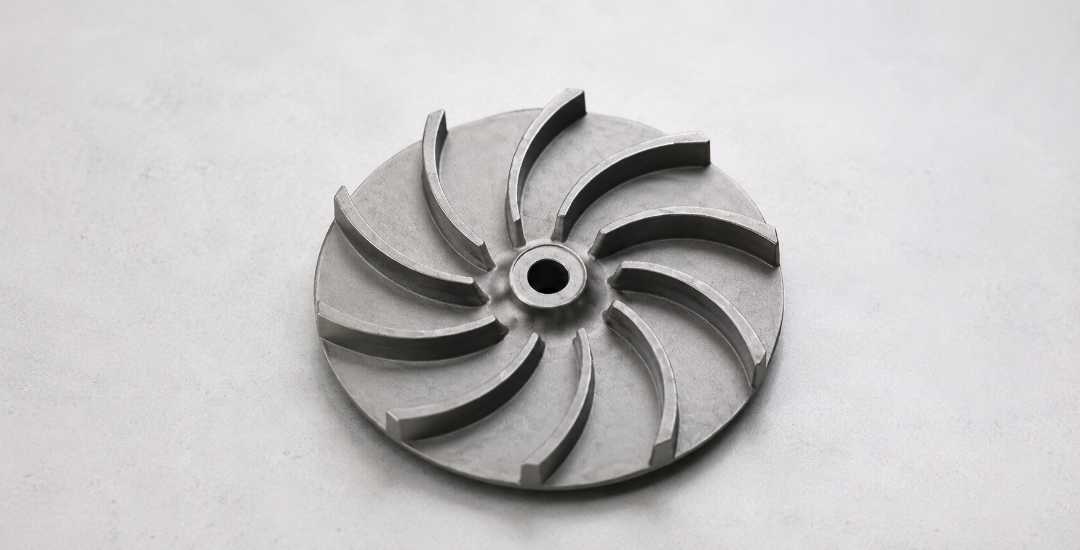
At the center of every centrifugal pump is the impeller, a rotating component mounted on the pump shaft. As it spins, the blades draw fluid into the eye and accelerate it outward.
The fluid gains velocity as it passes through the impeller. When it enters the pump casing, part of that velocity is converted into pressure, allowing the pump to move fluid through the system.
The geometry of the impeller influences flow rate, pressure generation, efficiency, and the types of fluids the pump can handle. Different designs are therefore suited to different operating conditions, which is why impeller selection plays a key role in pump performance.
2. Structural Types: Open, Semi‑Open, and Closed Impellers
One of the most important ways to classify impellers is by their mechanical structure. Whether the blades are enclosed by shroud plates directly affects efficiency, solids handling, wear characteristics, and maintenance requirements.
The table below compares the three main structural designs used in centrifugal pumps.
Type | Structure | Эффективность | Solids Handling | NPSH Requirement | Типичные применения |
|---|---|---|---|---|---|
Open | No shrouds; blades are exposed | Lowest (50–70%) | Best | Выше | Wastewater, slurries, fluids with large solids |
Semi‑Open | Rear shroud only, no front shroud | Moderate (60–80%) | Умеренный | Ниже | Fluids with small solids, low NPSH applications |
Closed | Blades between front and rear shrouds | Highest (70–90%) | Poor | Умеренный | Clean liquids, high‑pressure applications |
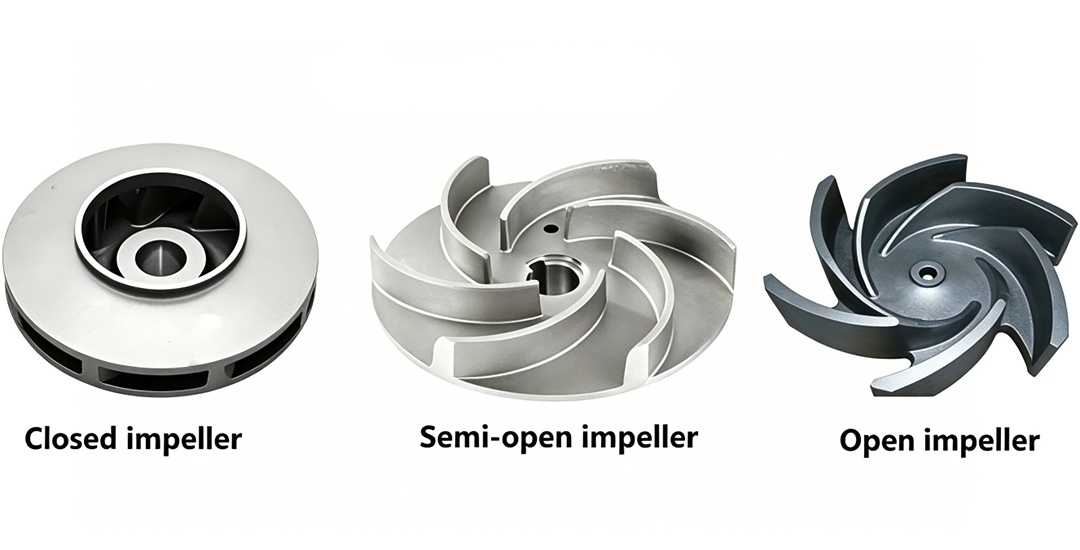
The table highlights the basic differences, but selecting the right impeller involves more than comparing efficiency values. A closed impeller typically delivers the highest efficiency under clean operating conditions, but its performance depends on maintaining tight internal clearances as components wear. An open impeller operates with lower efficiency but is far more tolerant of solids and wear, making it better suited to demanding environments. In most applications, the right choice depends on the fluid being handled, the operating conditions, and the maintenance interval expected from the pump.
Sources: Performance data is compiled from publicly available engineering references and manufacturer technical data sheets. Actual values may vary depending on design, operating conditions, and manufacturer specifications.
3. Flow Direction: Radial, Axial, and Mixed Flow Impellers
Blade geometry influences how efficiently an impeller transfers energy, as well as its pressure characteristics and suitability for different operating conditions. Different vane shapes are designed to balance efficiency, pressure, and durability in different ways.
Backward-Curved Vanes
Backward-curved vanes are generally the most efficient blade design. Their geometry allows fluid to leave the impeller smoothly, reducing turbulence and energy loss. As a result, they are widely used in high-efficiency centrifugal pumps and fans where energy efficiency is a priority.
Forward-Curved Vanes
Forward-curved vanes generate relatively high pressure for a given diameter and rotational speed, but the flow is more prone to separation, reducing overall efficiency. They are commonly used in low-pressure fans and HVAC systems where compact size and high airflow are more important than maximum efficiency.
Radial Vanes
Radial vanes have a straight blade profile, making them simple to manufacture and highly durable. Although their efficiency is moderate, they perform well in dusty or abrasive environments and handle particulate-laden air more effectively than curved vane designs. Typical applications include industrial dust collectors and material handling systems.
Different blade shapes prioritize different performance characteristics. Backward-curved vanes maximize efficiency, forward-curved vanes provide higher pressure within a compact design, and radial vanes offer greater durability in demanding operating environments. These characteristics also help determine where each impeller design performs best, which leads naturally to their typical applications.
4. Typical Applications of Impellers
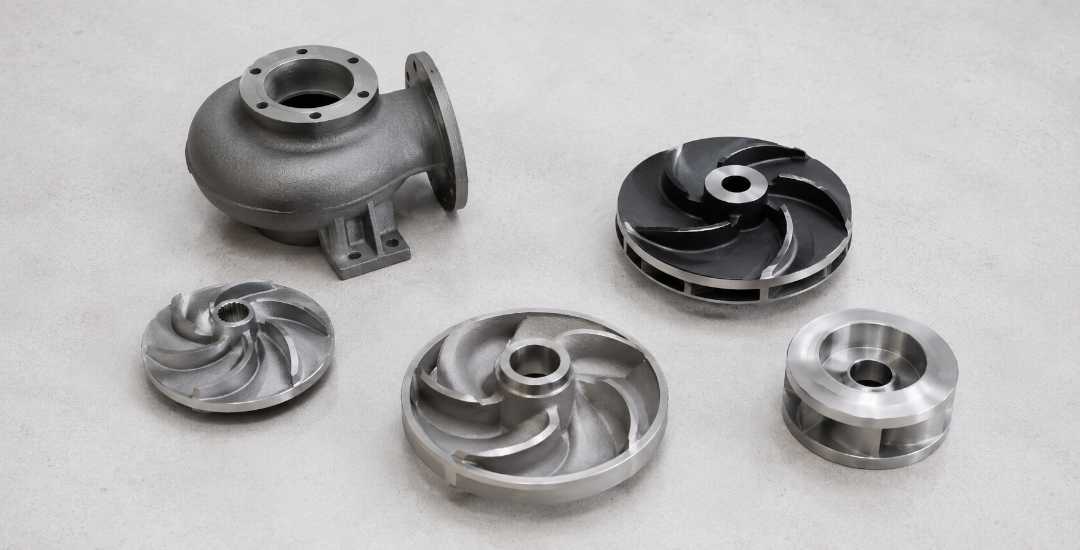
Different operating conditions place different demands on an impeller. The examples below show which designs are typically selected for common pumping applications and why they are suited to those conditions.
Clean Liquids and High-Efficiency Applications
For clean water, chemicals, and light oils, closed impellers are commonly preferred because they provide high hydraulic efficiency, smooth operation, and low vibration. They are widely used in industrial process pumps, water supply systems, and other applications where maximizing efficiency is a priority.
Fluids with Solids and Abrasive Content
Wastewater, slurries, and fluids containing sand or debris require impellers that can pass solids without clogging. Open impellers are well suited to these conditions because their exposed blades allow larger particles to pass more freely. For highly abrasive media, radial vane designs offer greater durability and are commonly used in sewage pumps, dredging pumps, and mining applications.
High-Pressure, Low-Flow Systems
Applications such as boiler feed, reverse osmosis, and high-pressure cleaning require pressure rather than high flow rates. Radial flow impellers are designed for this purpose and are widely used in multistage pumps where maintaining pressure is the primary objective.
High-Flow, Low-Pressure Systems
Cooling water circulation, flood control, and irrigation require large volumes of fluid to be moved efficiently at relatively low pressure. Axial flow impellers are designed for these conditions, making them a common choice wherever high flow capacity is more important than pressure.
Special Cases: Fibers and Tough Solids
Paper stock, textile waste, and municipal wastewater containing rags or long fibers can quickly clog conventional impellers. In these applications, designs with larger flow passages are better able to handle fibrous materials and reduce the risk of blockage. In general, cleaner fluids allow more enclosed impeller designs with higher efficiency, while increasing amounts of solids or fibers require progressively more open designs to maintain reliable operation.
Application requirements often narrow the choice to one or two suitable impeller designs before factors such as materials, manufacturing methods, or maintenance considerations come into play.
5. Special Impeller Types
Most pumping applications can be served by the impeller types discussed earlier, but some operating conditions require specialized designs. These impellers are intended for specific hydraulic or mechanical challenges that conventional designs cannot address effectively.
The table below summarizes several common special-purpose impeller designs and their typical applications.
Type | Key Feature | Typical Application |
|---|---|---|
Double‑suction | Draws fluid from both sides; balances axial thrust | Large pumps, high‑thrust applications |
Free‑flow | Wide open passages; passes solids without clogging | Raw wastewater, sludge |
Multi‑channel | Multiple curved passages; better efficiency than free‑flow | Municipal wastewater treatment |
Chopper | Cutting edges shred solids before entering impeller | Long fibers, tough solids, rags |
Each special impeller design addresses a different engineering challenge. Double-suction impellers reduce axial thrust in large pumps, while free-flow, multi-channel, and chopper designs improve reliability when handling solids, sludge, or long fibers. Selecting one of these designs depends on the operating conditions rather than efficiency alone.
6. How Impeller Design Affects Performance
Performance differences become clearer when the main impeller designs are compared side by side. The table below summarizes the characteristics that most directly influence pump selection.
Type | Solids Handling | NPSH Requirement | Wear Sensitivity |
|---|---|---|---|
Open | Best | Выше | Низкий |
Semi‑Open | Умеренный | Ниже | Умеренный |
Closed | Poor | Умеренный | Высокий |
Although flow direction and blade geometry also affect performance, structural design has the greatest influence on efficiency, solids handling, and wear sensitivity. Closed impellers maximize efficiency in clean fluids, while open designs improve solids handling and wear resistance. The right choice depends on the operating conditions.
7. How to Select the Right Impeller
Start with two questions: what is in the fluid, and what does the pump need to do? Fluid composition is usually the first factor in selecting an impeller because it determines whether an open, semi-open, or closed design is appropriate. Once that decision is made, flow and pressure requirements help determine whether a radial, axial, or mixed-flow impeller is the best fit.
The table below summarizes common selection guidelines for typical pumping applications.
Приложение | Recommended Type |
|---|---|
Clean liquids, high efficiency | Closed impeller, backward‑curved vanes |
Fluids with solids or abrasives | Open or semi‑open impeller |
High pressure, low flow | Radial flow |
High flow, low pressure | Axial or mixed flow |
Wastewater, long fibers | Free‑flow or chopper impeller |
In general, cleaner fluids allow more enclosed impeller designs, while solids and fibers require more open configurations. Pressure requirements favor radial flow, whereas high-flow applications are better served by axial or mixed-flow designs. When more than one design meets the hydraulic requirements, factors such as wear, maintenance, and operating conditions often determine the final choice.
8. Impeller Wear and Maintenance
Impellers gradually wear during service, especially when handling abrasive, corrosive, or solid-laden fluids. Common causes include cavitation, abrasion, and corrosion, all of which reduce efficiency and shorten service life if left unaddressed. Maintaining adequate NPSH, selecting suitable materials, and performing routine inspections are some of the most effective ways to minimize wear and improve long-term reliability.
Regular maintenance should focus on blade wear, surface damage, and internal clearances. Replacing worn components before performance declines helps reduce unplanned downtime, while monitoring wear patterns can also make future maintenance and replacement planning more predictable.
Заключение
No single impeller design is the best choice for every application. Fluid characteristics, pressure requirements, flow rate, and maintenance expectations all influence the final selection. Evaluating these factors together leads to better pump performance, longer service life, and lower operating costs.
Once the design has been selected, manufacturing quality becomes just as important. Blade geometry, dimensional accuracy, surface finish, and dynamic balance all affect how an impeller performs in service. Precision machining helps ensure that the finished component performs as intended.
В Беска, we provide precision CNC machining for custom impellers and other complex pump components. Whether you need a prototype or production parts, our team can manufacture precision components based on your drawings and technical requirements.
Deeper into Our Resources
Для вашего содержательного чтения мы составили список рекомендуемых статей:
 Russian
 English
 Hebrew
 Turkish
 French
 German
 Spanish
 Portuguese