


Titanium alloys and stainless steel are two of the most widely used engineering materials in manufacturing today. Both offer impressive combinations of strength, corrosion resistance, and versatility, yet they differ significantly in composition, performance, and cost.
From aerospace components to surgical instruments, choosing between titanium alloys and stainless steel often depends on the specific balance of properties required for a project.
This article compares these materials in depth, with a focus on their mechanical characteristics, corrosion resistance, and suitability for different manufacturing processes such as CNC machining.

1. Composition and Microstructure: Titanium Alloys vs Stainless Steel
The distinct composition and microstructure of titanium alloys form the basis for their unique performance characteristics, which can be analyzed before considering stainless steel.
Titanium Alloys
Titanium alloys are primarily composed of titanium with small amounts of other elements such as aluminum, vanadium, molybdenum, or tin to improve strength and corrosion resistance. The most common grade, Ti-6Al-4V, contains about 6% aluminum and 4% vanadium.
Titanium alloys can be classified into:
- Alpha alloys—excellent corrosion resistance, moderate strength
- Beta alloys—higher strength, easier to process
- Alpha-beta alloys—balanced properties for structural applications
They have a hexagonal close-packed (HCP) crystal structure at room temperature, which transitions to body-centered cubic (BCC) at higher temperatures.
Stainless Steel
Stainless steel is an iron-based alloy containing at least 10.5% chromium, which forms a protective oxide layer. It is further alloyed with elements like nickel, molybdenum, and manganese to enhance properties.
The main categories include:
- Austenitic stainless steels (e.g., 304, 316)—non-magnetic, excellent corrosion resistance
- Ferritic stainless steels—magnetic, good corrosion resistance, lower cost
- Martensitic stainless steels—magnetic, high strength, moderate corrosion resistance
- Duplex stainless steels—a mix of austenitic and ferritic structures, offering high strength and good corrosion resistance
2. Mechanical and Physical Properties Comparison:
The following comparison highlights key metrics such as strength, stiffness, thermal behavior, and corrosion resistance, which determine their suitability for various engineering and industrial applications.
| Property | Titanium Alloys (e.g., Ti-6Al-4V) | Stainless Steel (e.g., 304) |
| Density (g/cm³) | ~4.43 | ~7.9 |
| Yield Strength (MPa) | 800–1,100 | 200–600 |
| Tensile Strength (MPa) | 900–1,200 | 500–750 |
| Elastic Modulus (GPa) | ~110 | ~190–210 |
| Hardness (HB) | 300–350 | 150–200 |
| Thermal Conductivity (W/m·K) | 6–7 | 15–25 |
| Coefficient of Thermal Expansion (µm/m·°C) | 8.6 | 16–17 |
| Melting Point (°C) | 1,660 | 1,400–1,500 |
| Corrosion Resistance | Excellent | Very good (varies by grade) |
| Biocompatibility | Excellent | Good (austenitic grades best) |
These differences are the foundation for their contrasting applications. Titanium’s low density makes it ideal for weight-sensitive designs, while stainless steel’s higher modulus provides greater stiffness.
3. Corrosion Resistance and Environmental Performance
The corrosion resistance of titanium alloys is one of their most significant advantages. A stable, dense oxide layer forms spontaneously on the surface, protecting the underlying metal even if the surface is scratched or damaged. This property allows titanium alloys to perform reliably in harsh environments, including seawater, chlorides, acidic solutions, and oxidizing conditions. It also makes them highly suitable for marine structures, chemical processing equipment, and biomedical implants, where long-term stability and low maintenance are critical.
Stainless steel also exhibits strong corrosion resistance, particularly austenitic and duplex grades, which are widely used in chemical, food processing, and architectural applications. However, stainless steel is generally more susceptible to localized corrosion, such as pitting or crevice corrosion, in environments with high chloride concentrations. The corrosion performance can vary significantly depending on the alloy type, heat treatment, and surface finish, so selecting the appropriate grade is essential for coastal, marine, or chemical processing applications.
Comparing the two, titanium alloys offer superior resistance to a broader range of aggressive environments, while stainless steel provides a cost-effective solution for many standard applications. Understanding the environmental conditions and corrosion mechanisms is key to choosing the right material for long-term durability and performance.
4. Applications of Titanium Alloys
Titanium alloys are valued for their high strength-to-weight ratio, excellent corrosion resistance, and biocompatibility, making them suitable for a wide range of applications across various industries.

Aerospace
Titanium alloys are used in airframes, landing gear, engine components, and fasteners. Their lightweight nature helps reduce overall aircraft weight while maintaining structural integrity under high stress and temperature variations.
Medical implants
The biocompatibility of titanium alloys makes them ideal for joint replacements, dental implants, bone plates, and surgical instruments. They interact well with human tissue and are resistant to corrosion from bodily fluids, ensuring long-term reliability.
Chemical processing
Components such as heat exchangers, reactors, and piping systems benefit from titanium’s resistance to aggressive chemicals and seawater, allowing for extended service life in corrosive environments.
Sports equipment
High-performance bicycles, golf clubs, and other sporting goods take advantage of titanium alloys’ combination of strength, light weight, and fatigue resistance, improving performance without compromising durability.
High-end consumer goods
Watches, eyeglass frames, and premium electronics often incorporate titanium alloys for their durability, aesthetic appeal, and lightweight characteristics.
From a manufacturing perspective, titanium alloys can be CNC machined to high precision, but they require careful tooling, appropriate cutting speeds, and effective cooling due to their low thermal conductivity and tendency to work-harden. These factors make machining more demanding compared to stainless steel, but the resulting parts can achieve tight tolerances and excellent surface finishes, suitable for aerospace, medical, and precision engineering applications.
5. Applications of Stainless Steel
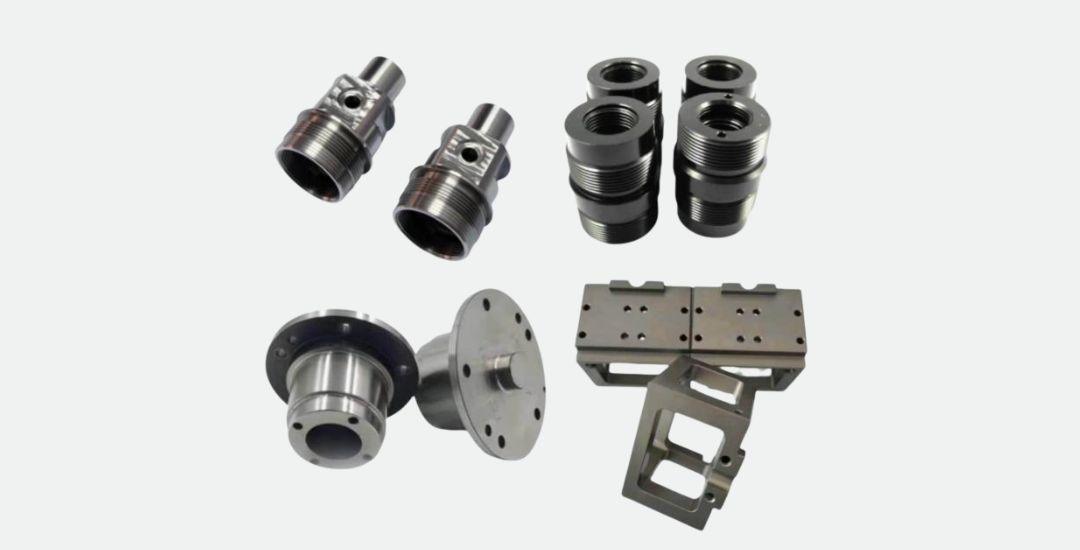
Its combination of strength, durability, corrosion resistance, and cost-effectiveness makes stainless steel a versatile material for a wide range of industries and applications.
Architecture and construction
Stainless steel is used for structural components, facades, cladding, roofing, and handrails. Its corrosion resistance ensures long-term performance in outdoor environments, while its aesthetic appeal allows for modern architectural designs.
Food and beverage industry
Processing equipment, storage tanks, piping systems, and kitchen appliances rely on stainless steel for its hygienic properties, easy cleaning, and resistance to corrosion from food acids and detergents.
Marine applications
Ship fittings, propeller shafts, and offshore structures benefit from stainless steel’s ability to resist seawater corrosion, particularly in austenitic and duplex grades. Proper alloy selection is important to prevent pitting and stress corrosion cracking in high-chloride environments.
Automotive parts
Stainless steel is used in exhaust systems, trim, fasteners, and structural components. Its combination of strength, heat resistance, and corrosion performance helps vehicles meet durability and safety standards.
Medical equipment
Surgical instruments, hospital furniture, and temporary implants often use stainless steel, especially austenitic grades like 304 and 316L, due to their biocompatibility, sterilization resistance, and corrosion performance in bodily fluids.
Stainless steel is easier and more cost-effective to work with than titanium alloys. It can be shaped through sheet metal forming, welding, casting, or machining, with less concern for heat buildup or tool wear. This makes it suitable for both large industrial projects and precision medical or consumer components.
6. Choosing Between Titanium Alloys and Stainless Steel
When deciding between titanium alloys and stainless steel, it helps to compare key factors:
- Weight: Titanium is about 40% lighter than stainless steel, making it ideal for applications where reducing mass is important.
- Strength-to-weight ratio: Titanium provides superior performance, offering high strength without adding extra weight.
- Corrosion resistance: Titanium performs exceptionally well in aggressive environments, including seawater and chemical exposure.
- Stiffness: Stainless steel is stiffer, which can be advantageous when structural rigidity is a priority.
- Cost: Stainless steel is more affordable and easier to process, often making it the practical choice for budget-sensitive projects.
In short, titanium stands out when extreme corrosion resistance and low weight are essential, while stainless steel is typically the better choice when cost and ease of fabrication are more critical.
Conclusion
Titanium alloys and stainless steel each have their strengths, and neither is universally superior. Titanium’s light weight and outstanding corrosion resistance make it ideal for high-performance, weight-critical applications, while stainless steel’s cost-effectiveness and ease of fabrication make it a reliable choice for a wide range of uses. Selecting the right material depends on balancing performance requirements, budget, and manufacturing considerations.
For your next project, carefully evaluate these factors to determine which material best meets your specific needs, or consult with a materials and manufacturing expert like the Beska team to ensure optimal performance and cost-efficiency.
Dive Deeper Into Our Resources
For some insightful reads, we’ve curated a list of recommended articles just for you:
 English
 Hebrew
 Turkish
 French
 Russian
 German
 Spanish
 Portuguese