


Stainless steel is one of the most versatile materials used across industries. From aerospace and medical devices to food processing and architecture, its balance of corrosion resistance, strength, and workability makes it a preferred choice. Among the many stainless steel grades available, two stand out in frequent comparisons: 17-4 stainless steel and 304 stainless steel.
Both alloys are highly valued but serve different purposes. 17-4 stainless steel (a precipitation-hardening martensitic grade) is recognized for its outstanding strength, while 304 stainless steel (an austenitic grade) is widely used for its excellent corrosion resistance and ease of fabrication. For projects that require precision stainless steel components, you can request samples from us.
In this article, we’ll explore their chemical compositions, mechanical properties, corrosion resistance, and manufacturability.
1. What Is 17-4 Stainless Steel (17-4 PH)?

17-4 stainless steel, designated as UNS S17400, belongs to the precipitation-hardening martensitic family. Its name comes from its typical composition of 17% chromium and 4% nickel. This grade uniquely combines high strength, moderate corrosion resistance, and the ability to fine-tune mechanical properties through heat treatment.
In its solution-annealed state, 17-4 is relatively soft, making machining and forming easier. However, after aging heat treatment, its tensile strength can reach 900–1310 MPa, significantly higher than common austenitic stainless steels like 304. This flexibility makes it attractive for components that must balance strength with resistance to wear and fatigue.
2. What Is 304 Stainless Steel?
304 stainless steel, with UNS designation S30400, is the most widely used austenitic grade. With a composition of 18% chromium and 8% nickel, it is also known as 18-8 stainless steel. Its popularity comes from a combination of excellent corrosion resistance, reliable weldability, and good formability across a wide temperature range.
Unlike 17-4 PH, 304 cannot be strengthened by heat treatment. Instead, it delivers consistent corrosion resistance and ease of fabrication. While its strength is lower than 17-4, it performs well in harsh environments and is widely available, making it a dependable choice for everyday applications.
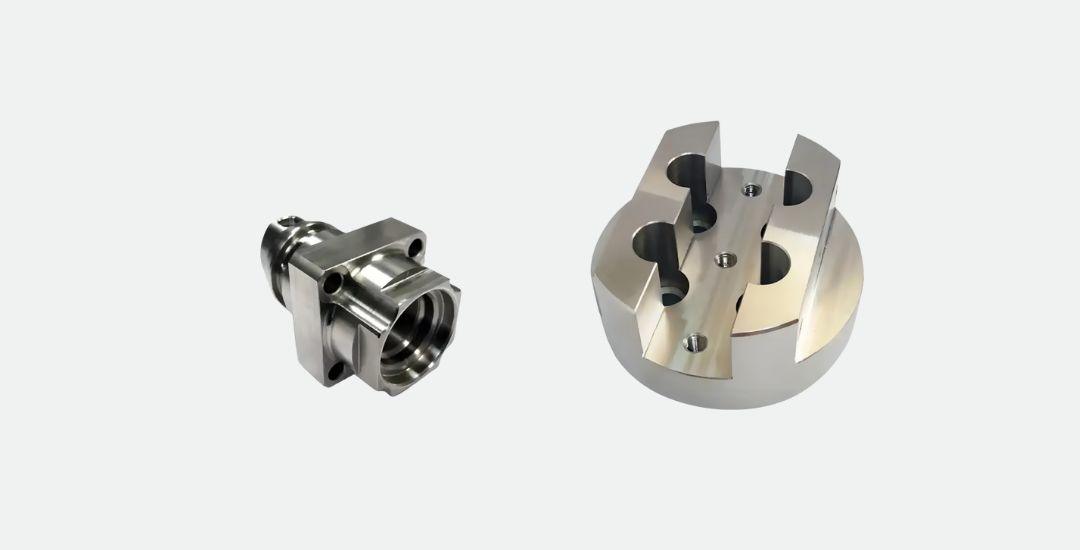
3. Chemical Composition Comparison
One of the main factors that set 17-4 PH and 304 stainless steel apart is their chemical composition. Here’s a side-by-side comparison of their typical elemental makeup:
| Element (%) | 17-4 PH (S17400) | 304 (S30400) |
| Chromium (Cr) | 15.0–17.5 | 18.0–20.0 |
| Nickel (Ni) | 3.0–5.0 | 8.0–10.5 |
| Carbon (C) | ≤0.07 | ≤0.08 |
| Manganese (Mn) | ≤1.0 | ≤2.0 |
| Silicon (Si) | ≤1.0 | ≤1.0 |
| Phosphorus (P) | ≤0.04 | ≤0.045 |
| Sulfur (S) | ≤0.03 | ≤0.03 |
| Copper (Cu) | 3.0–5.0 | – |
| Niobium + Tantalum (Nb+Ta) | 0.15–0.45 | – |
| Nitrogen (N) | – | ≤0.10 |
4. 17-4 stainless steel vs 304: Corrosion Resistance
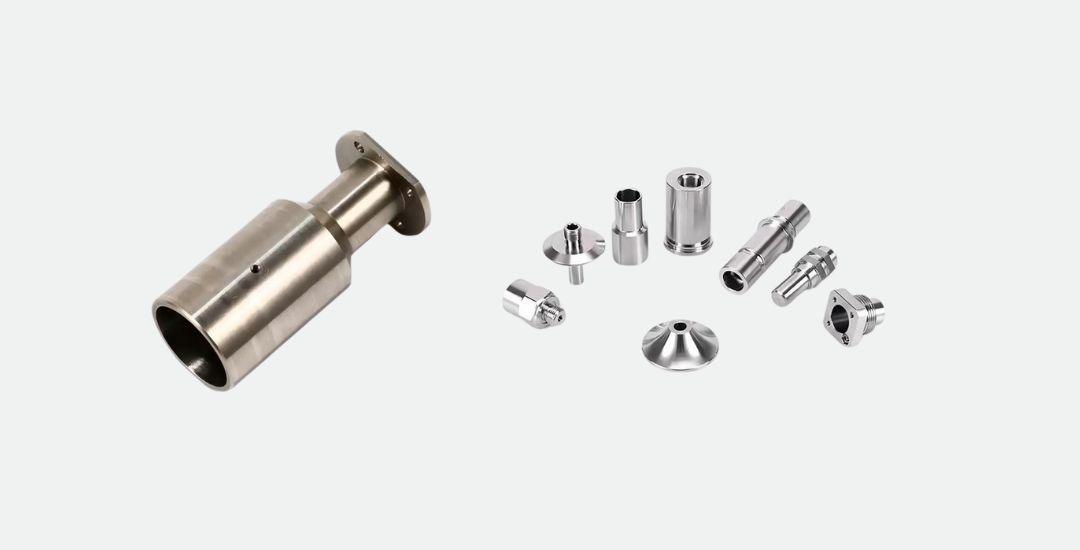
304 stainless steel is especially well-known for its corrosion resistance. Its higher chromium and nickel levels give it strong resistance to oxidation and many types of chemical exposure, making it an excellent choice for food processing equipment, kitchenware, and chemical containers.
17-4 stainless steel offers decent corrosion resistance but generally does not perform as well as 304 in highly aggressive environments. However, it provides a balance between corrosion resistance and mechanical strength, which is why it is often selected for marine components, aerospace hardware, and chemical processing equipment where strength is critical.
Key Corrosion Considerations
- General Corrosion. In mild environments such as atmospheric exposure, freshwater, and many chemical solutions, 304 typically provides better overall corrosion resistance than 17-4 PH. This advantage comes from its higher chromium and nickel content and a stable austenitic structure. However, in certain situations, properly heat-treated 17-4 PH can achieve corrosion resistance comparable to 304, particularly when in high-strength conditions.
- Pitting and Crevice Corrosion. 304 can be prone to pitting and crevice corrosion in chloride-rich environments, such as seawater or de-icing salts. Its Pitting Resistance Equivalent (PRE) is around 18. While 17-4 PH has a slightly lower PRE (16–17), its martensitic matrix and copper addition often result in similar or slightly better resistance in certain conditions, especially when heat-treated to H1150.
- Stress Corrosion Cracking (SCC) . Austenitic 304 stainless steel may experience stress corrosion cracking when exposed to chloride ions under tensile stress, particularly at temperatures above 60°C. By contrast, 17-4 PH is less sensitive to SCC due to its martensitic structure, making it more suitable for warm chloride-containing environments, such as certain petrochemical or marine applications.
- Other Forms of Corrosion. Intergranular corrosion: Low-carbon 304L and properly heat-treated 17-4 PH both resist this form of corrosion effectively; Corrosion fatigue: 17-4 PH maintains better performance under high-strength cyclic loading; High-temperature oxidation: 304 excels in oxidizing environments above 800°C due to a more stable chromium oxide layer.
| Property | 17-4 PH | 304 |
| Passivation Layer | Cr–Ni–Cu composite, superior SCC resistance | Cr–Ni layer, stronger resistance to pitting and crevice corrosion |
| Typical Use | Freshwater, atmospheric, mild chemicals, marine environments | Food-grade, mild acids/bases, high-temperature oxidation (<800°C) |
| Limitations | May corrode in high-concentration chlorides (e.g., static seawater) | Sensitive to chloride-rich environments (e.g., seawater) |
By comparing these aspects, it becomes clear that 304 is generally preferred for environments demanding strong overall corrosion resistance, whereas 17-4 PH is chosen when a combination of strength and moderate corrosion resistance is needed.
5. 17-4 Stainless Steel vs 304: Mechanical Properties and Strength
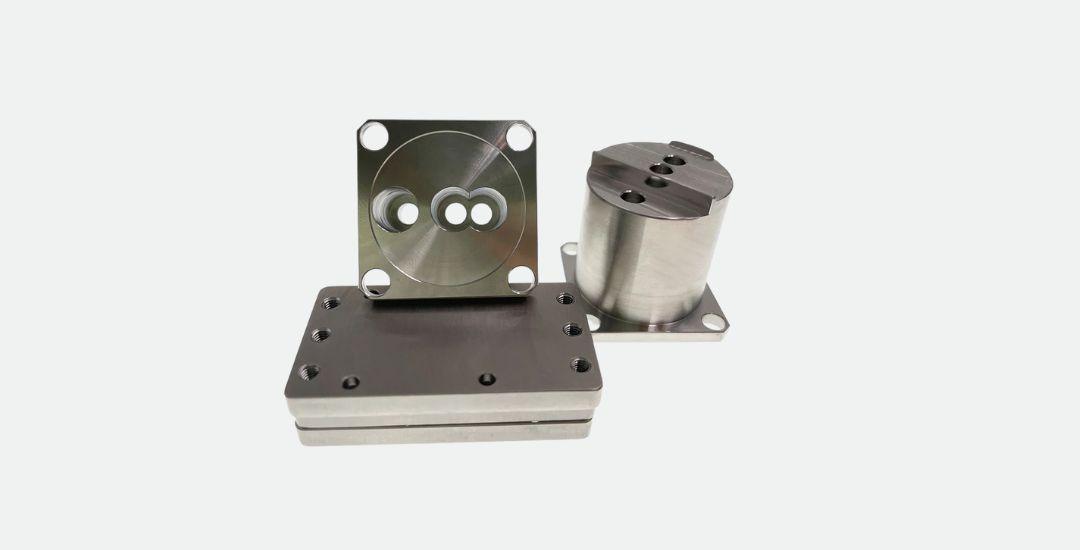
17-4 PH and 304 stainless steel offer distinct mechanical advantages, making each suitable for different applications.
17-4 PH: High Strength, Adjustable Performance
In the solution-annealed state, 17-4 PH has a tensile strength around 790 MPa and hardness up to HRC 35, making it easy to machine. After aging (e.g., H900), strength increases to 1310–1400 MPa and hardness to HRC 40–45, which is about three times that of 304. It maintains good toughness, with impact energy ≥27 J at –40°C and fracture toughness around 110 MPa√m, but high-temperature performance drops above 300°C.
304 Stainless Steel: Balanced Ductility and Toughness
304 has a tensile strength of 515–1035 MPa, yield strength ≥205 MPa, and elongation ≥40%, providing excellent ductility and low-temperature toughness. Cold working increases strength but reduces ductility, which can be restored by annealing. Its performance is stable from –196°C to 800°C, making it versatile for applications needing flexibility and corrosion resistance.
Direct Comparison
| Property | 17-4 PH (H900) | 304 (Annealed) |
| Tensile Strength | 1310 MPa | 515–580 MPa |
| Yield Strength | 1170 MPa | 205–230 MPa |
| Hardness | HRC 40–44 | HB ≤201 / HRB ≤90 |
| Elongation | 10–16% | ≥40% |
| Elastic Modulus | 210 GPa | 193 GPa |
In short, 17-4 PH excels in high-load, stress-critical components, while 304 is better for ductile, formable parts with wide temperature range requirements.
6. Workability and Machinability
17-4 PH and 304 stainless steel differ significantly in how they can be formed, machined, and welded.
Formability
- 304 Stainless Steel: Highly ductile and easy to form. It can undergo deep drawing, spinning, bending, and other complex forming operations without cracking. Its elongation above 40% and good cold-work hardening make it ideal for components requiring significant deformation, such as kitchenware, medical enclosures, and decorative parts.
- 17-4 PH Stainless Steel: Limited formability, especially after aging. In the annealed state, light bending or stamping is possible. However, once aged to high-strength conditions (e.g., H900), cold forming is nearly impossible. Complex parts are usually shaped first in the annealed state, then heat-treated for final strength.
Machinability
- 304 Stainless Steel: Machinable but work-hardens quickly, requiring sharp tools, controlled feed rates, and cooling. Suitable for CNC machining and sheet metal forming with minimal complications.
- 17-4 PH Stainless Steel: Easier to machine in the annealed state but becomes challenging after aging due to high hardness. Requires carbide tools, slower cutting speeds, and careful process control to maintain precision.
Weldability
- 304 Stainless Steel: Excellent weldability with all standard techniques (GTAW, GMAW, laser). Post-weld heat treatment is generally not needed, but distortion and sensitization should be monitored.
- 17-4 PH Stainless Steel: Weldable but more complex. Welding is usually performed in the annealed state, followed by re-aging to restore mechanical properties. Proper filler material selection, such as 17-4 PH or 309/310 stainless steel, is crucial.
Other Considerations
- Polishing: 304 achieves smoother surface finishes.
- Magnetism: 17-4 PH is magnetic after aging; 304 is non-magnetic in the annealed state, with slight magnetism possible after cold work.
- Dimensional Stability: 17-4 PH may experience 0.05–0.2% dimensional changes during heat treatment, important for precision components.
| Property | 17-4 PH | 304 |
| Cold Working | Possible in annealed state; limited after aging | Excellent; suitable for deep drawing and rolling |
| Hot Working | Forging 1000–1170°C; avoid <850°C | Forging/rolling 1050–1150°C |
| Welding | GTAW/GMAW possible; re-aging required | Excellent; no pre/post treatment needed |
| Magnetism | Weak when annealed, strong after aging | Non-magnetic (slight magnetism after cold work) |
For applications involving CNC machining or sheet metal forming, 304 tends to be more cost-efficient and less demanding, while 17-4 is chosen for parts requiring higher performance despite the additional processing challenges.
7. Surface Finishing Insights for 17-4 PH and 304
After reviewing the workability and machinability of 17-4 PH and 304 stainless steel, it is important to consider how surface finishing and post-processing can affect part performance, durability, and appearance.
17-4 PH Stainless Steel
This grade can undergo polishing, sandblasting, or in rare cases, light anodizing. The finishing method can influence surface hardness, corrosion resistance, and fatigue life. Careful planning of the process helps maintain mechanical properties while achieving the desired surface quality.
304 Stainless Steel
304 is commonly polished to a mirror finish or passivated to improve corrosion resistance. Welding typically does not require post-weld heat treatment, which simplifies assembly for complex parts. Proper surface treatment also enhances wear resistance and aesthetic appeal.
Engineering Considerations
The choice of finishing and post-processing steps affects production sequence, tooling requirements, and overall cost. Coordinating machining and finishing ensures consistent quality for precision components.
This approach ensures both functional performance and a high-quality surface finish for each grade.
8. Selection Guide: When to Choose 17-4 PH or 304 Stainless Steel
Based on the comparisons of corrosion resistance, mechanical performance, and workability, the table below summarizes recommended applications for each material:
| Application Requirement | Recommended Material | Notes |
| High strength with moderate corrosion resistance | 17-4 PH | Heat-treatable to achieve precise mechanical properties. Offers excellent resistance to stress corrosion cracking and a hard, wear-resistant surface. Ideal for parts where strength and performance are critical. |
| Magnetic properties required | 17-4 PH | Naturally magnetic due to its martensitic microstructure, suitable for components where magnetic characteristics are needed. |
| Comprehensive corrosion resistance | 304 | Austenitic structure with high chromium and nickel content. Well-suited for food, pharmaceutical, and chemical environments. |
| Complex forming and fabrication | 304 | Excellent ductility and controllable work-hardening make it ideal for deep drawing, spinning, or complex bending operations. |
| Low-temperature toughness | 304 | Maintains good toughness even in extremely low-temperature conditions. |
| Cost-sensitive or low-strength applications | 304 | Offers a balance of performance and affordability, suitable for general structural parts or low-stress applications. |
| High-temperature or specialized requirements | Other stainless steels | For higher strength: 15-5 PH or Custom 450. For superior corrosion resistance: 316 or 2205 duplex steel. For high-temperature performance: 310 or 253MA. |
Summary: 17-4 PH is ideal for applications requiring high strength, wear resistance, and resistance to stress corrosion cracking. 304 excels where corrosion resistance, low-temperature toughness, and complex forming are priorities.
Conclusion
When comparing 17-4 stainless steel vs 304, the choice is less about which is “better” and more about which is more appropriate for the job. 17-4 provides exceptional strength and heat-treatable properties, making it ideal for demanding structural and aerospace uses. 304 delivers excellent corrosion resistance, weldability, and affordability, which explains its widespread use in food, chemical, and architectural applications.
Both grades have earned their place as essential materials in modern industry. The right choice depends on balancing performance needs, environmental conditions, and budget considerations. To ensure high-performance results, it’s equally important to consult with a reliable custom metal fabrication supplier like the Beska team who can provide the appropriate grade, processing, and technical support for your project.
Deeper into Our Resources
For some insightful reads, we’ve curated a list of recommended articles just for you:
- Alloy Steel VS Stainless Steel
- Titanium vs Stainless Steel
- Galvanized Steel VS Stainless Steel
- CNC Machining Stainless Steel
- CNC Machining Metal Materials
- Sheet Metal Forming
 English
 Hebrew
 Turkish
 French
 Russian
 German
 Spanish
 Portuguese