


Transparent polymers have moved far beyond glass. From smartphone screens and medical devices to architectural panels and automotive lighting, polycarbonate (PC) and polymethyl methacrylate (PMMA, acrylic) are the two standouts. They share a clear appearance but differ markedly in impact strength, clarity, durability and processing behavior.
Choosing between them is rarely obvious. A material that gives perfect optical clarity may chip during machining; another that shrugs off impact may demand tighter process control or higher cost.
This article takes a side-by-side look at PC and PMMA, showing how their properties and processing routes affect real-world performance and where each one tends to work best.
1. What Is Polycarbonate (PC)?

Polycarbonate is a transparent thermoplastic known for combining high impact strength with good heat resistance. Its molecular structure—rigid aromatic rings linked by flexible carbonate groups—gives it toughness without making it brittle.
Since its introduction in the mid-20th century, PC has moved from aerospace into electronics, building components and medical devices. It stays clear even at greater thicknesses and resists cracking or shattering, which is why it is often chosen for safety glazing and other demanding transparent parts.
2. What Is PMMA (Acrylic)?
Polymethyl methacrylate (PMMA), widely known as acrylic, is a lightweight, transparent thermoplastic prized for its exceptional optical clarity and surface quality. It transmits up to about 92% of visible light with minimal color shift and naturally produces a glossy finish.
These features made it an early glass replacement for aircraft windows and optical lenses, and they still drive its use today in signage, displays, decorative panels and lighting covers. Compared with polycarbonate, PMMA is more rigid but also more brittle, offering lower impact strength but easier polishing, coloring and texturing.

3. Key Performance Differences: Polycarbonate vs PMMA
The table below highlights essential differences between PC and PMMA across mechanical, thermal, optical, and chemical properties.
| Eigentum | Polycarbonate (PC)—typical values | PMMA / Acrylic—typical values | Quick note |
| Impact strength (notched) | ≥ 60 kJ/m² (very high toughness) | ≈ 2–3 kJ/m² (brittle) | PC is ~10–30× tougher—the primary reason to pick PC where impact matters. |
| Tensile strength (σt) | 65–75 MPa | 50–70 MPa | Comparable at room temp; PC keeps strength better under heat/low temp. |
| Flexural strength | 95–110 MPa | 70–90 MPa | PC resists bending and long-term deflection better. |
| Surface hardness (Rockwell R) | ~110–120 HRR | ~100–110 HRR | Both scratch easily; PMMA shows scratches more visibly due to higher gloss. |
| Heat deflection temp (HDT, 0.45 MPa) | ~130–140°C | ~80–100°C | PC tolerates much higher working temperatures. |
| Continuous service temp | ≈ −40 °C to +120 °C | ≈ −40 °C to +80 °C (softens above ~80 °C) | For hot environments, choose PC. |
| Linear thermal expansion (CTE) | ~6.0×10⁻⁵ /°C (≈ 60 ppm/°C) | ~7.0–9.0×10⁻⁵ /°C (≈ 70–90 ppm/°C) | PMMA expands more—tighter tolerances need compensation. |
| Light transmission (visible) | ~88–90% | ~92–93% | PMMA gives the clearest, most “glass-like” look. |
| Weathering/yellowing | Good—better UV resistance in many grades | Poor unless UV-stabilized; will yellow with long sun exposure | Outdoor: prefer UV-grade PC or UV-stabilized PMMA. |
| Chemical resistance | Resists alcohols; vulnerable to ketones and aromatic hydrocarbons (e.g., toluene, xylene); strong acids attack surface | Resists water & alcohols; sensitive to ketones/esters (e.g., acetone, ethyl acetate) and many organic solvents | Both are NOT universal—match chemical exposure to the material. |
After comparing the numbers side by side, patterns emerge: PMMA excels in clarity and surface quality, while PC stands out for impact strength, heat tolerance and dimensional stability.
4. Common Processing Ways Comparison: Polycarbonate (PC) vs Acrylic (PMMA)
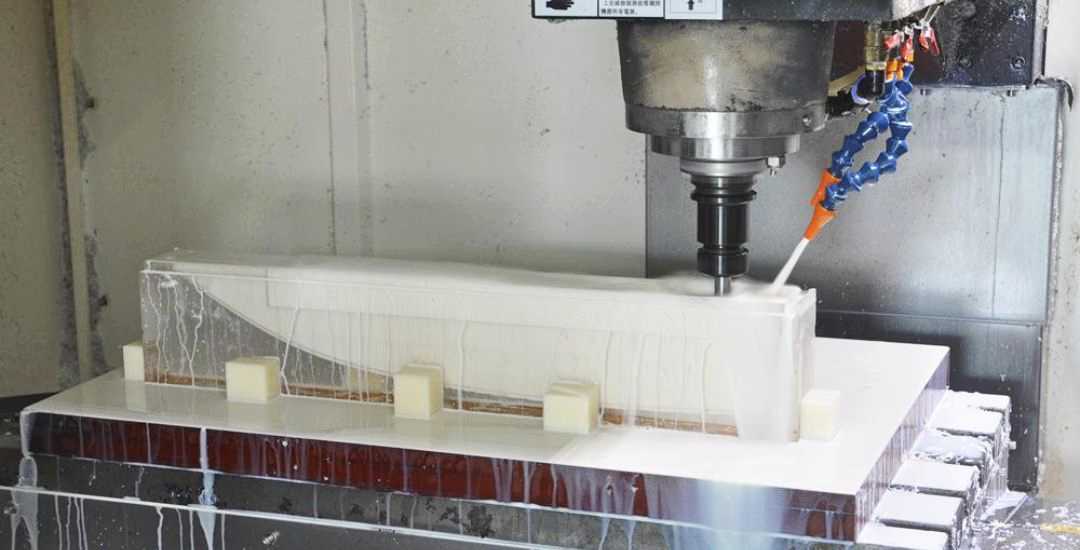
Processing characteristics directly affect part quality, cost, and production time. Below is a side-by-side comparison of how PC and PMMA perform under common fabrication techniques:
| Processing Method | Polycarbonat (PC) | Acryl (PMMA) |
| CNC-Bearbeitung | Tough & ductile—requires sharp tools, higher feed, and risk of internal stress and stress cracking; cooling fluid compatibility is important. | Brittle—needs sharp tools and stable fixturing to avoid chipping; slower cutting speeds; post-polishing yields optical finish easily. |
| Laserschneiden | CO₂ laser causes charring/melting; UV laser or waterjet is preferred for clean edges. | A CO₂ laser produces smooth, flame-polished edges and is widely used for clear parts. |
| Spritzguss | High processing temperature (260–300°C); slower flow, more complex mold design needed. | Lower processing temperature (200–240°C); better flow, easier mold filling and demolding. |
| Thermoforming | Requires higher forming temperature; better impact strength after forming but more springback. | Forms at lower temperature; holds shape well but can crack if overstretched. |
| Bonding/Joining | Limited solvent bonding; mechanical fastening or specialized adhesives are recommended. | Wide range of solvent and UV adhesives; bonds easily. |
| Finishing/Polishing | Multi-step sanding and polishing to reach transparency. | Flame or mechanical polishing can quickly achieve high clarity. |
These contrasts reveal how material choice and processing are inseparable decisions in real-world manufacturing.
5. Typical Applications: Polycarbonate vs PMMA

PC and PMMA show their strengths in different kinds of projects. Looking at where each is already used helps you quickly narrow down the right material for your own designs:
Polycarbonate (PC): Built for Impact and Heat
Polycarbonate is chosen for parts that need to withstand mechanical stress, heat, or prolonged outdoor exposure. You’ll find it in safety helmets and protective visors, baby stroller components, and bullet-resistant glazing, where toughness is critical. Automotive lamp housings, electronic enclosures, greenhouse panels, and various mechanical parts also benefit from PC’s durability and heat resistance. In short, wherever resilience and long-term performance are priorities, PC is often the material of choice.
PMMA (Acrylic): Designed for Clarity and Finish
PMMA excels when optical quality, surface gloss, and cost efficiency are key considerations. It is widely used in advertising signs and illuminated displays, as well as in display cases, aquarium panels, and light diffusers that demand high transparency. Optical lenses, decorative panels, and architectural elements also make use of PMMA’s clarity and smooth finish. In general, PMMA dominates in applications where visual appeal and light transmission outweigh the need for extreme impact resistance.
These examples show how the two polymers naturally divide the market: PC dominates when resilience and long-term durability are essential, while PMMA takes the lead where optical quality and design freedom are top priorities.
6. How to Choose Between PC and PMMA
When selecting between polycarbonate (PC) and PMMA, it helps to look beyond surface appearance and focus on performance, environment, and processing needs.
Define the Core Requirement
- If the part must resist impact, heat, or flame—think electronics housings, protective visors, or outdoor components—PC is usually the better choice due to its toughness and thermal stability.
- If maximum transparency, surface gloss, or cost efficiency is more important—as with display cases, signage, or decorative panels—PMMA tends to perform better.
- For outdoor applications, PC with UV protection is generally preferred to prevent yellowing and maintain long-term durability.
Quick Identification Tips
- Transparency can be a clue: PMMA appears crystal clear with minimal color, whereas PC often has a faint blue-green tint.
- Flexibility also helps differentiate them: PC bends slightly without cracking, while PMMA is stiffer and more brittle.
- Check supplier labels or datasheets—reputable sources clearly mark “PC,” “PMMA,” or “acrylic” to avoid confusion.
Avoid Common Misconceptions
- PMMA is not inherently “more durable” than PC; in fact, its impact and heat resistance are lower.
- Food-grade PC is available and safe, but always verify “food contact approved” when required.
- Understanding material behavior is more important than assuming performance from appearance or cost alone.
By weighing toughness, clarity, and environmental factors, you can select the material that best balances performance, aesthetics, and long-term reliability.
7. Emerging Trends of PC and PMMA
The landscape of transparent polymers is evolving, offering more than a simple choice between PC and PMMA. New developments are helping engineers and designers push performance, sustainability, and functionality further:
- PC/PMMA Blends: Combining the toughness of PC with the optical clarity of PMMA, these blends are increasingly used in automotive lamp covers, premium displays, and protective housings where both impact resistance and high transparency are required.
- Bio-based and Sustainable Polymers: Manufacturers are exploring renewable feedstocks to produce bio-based PC and PMMA alternatives, aiming to reduce environmental impact without sacrificing performance.
- Functional Modifications: Enhanced properties such as scratch resistance for PC or flame retardancy for PMMA are expanding the scope of applications, enabling use in harsher environments or for longer-lasting consumer products.
- Advanced Coatings and Surface Treatments: Anti-reflective, anti-fog, or UV-protective coatings are becoming standard for high-value parts, further extending the lifespan and performance of both polymers.
These trends illustrate that transparent polymers are no longer a simple trade-off. By carefully selecting or modifying materials, designers can tailor performance, durability, and appearance to meet increasingly demanding requirements.
Abschluss
Polycarbonate and PMMA each bring distinct advantages to transparent design. Understanding their mechanical, thermal, optical, chemical, and processing profiles helps you match material to application. For CNC machining, polycarbonate offers high impact strength and stability under heat, while acrylic allows easier cutting, polishing, and bonding at a lower cost. By weighing these factors, you can select the material that best meets the needs of your next project.
To ensure optimal results, partner with a supplier like the Beska team who is experienced working with both PC and PMMA. You can get a complete guide on material selection, suggest suitable processing methods, and provide quality parts that meet your exact specifications.
Tauchen Sie tiefer in unsere Ressourcen ein
Damit Sie einige aufschlussreiche Lektüre finden, haben wir eine Liste mit empfohlenen Artikeln speziell für Sie zusammengestellt:
- How to Chrome Plate Plastic
- Vapor Polishing Acrylic
- CNC Machining Polycarbonate Service
- CNC-Bearbeitung von Kunststoffmaterialien
- CNC-Frässervice
 German
 English
 Hebrew
 Turkish
 French
 Russian
 Spanish
 Portuguese