
CNC Machining Acrylic
- High-precision acrylic machining for clear, durable, custom parts
- ISO-certified manufacturing process
- Flame/vapor polishing available

Beska – Beste Qualität zu wettbewerbsfähigen Preisen.
Wir sind mit unserer Fachkompetenz in der Blechbearbeitung und CNC-Bearbeitung für Sie da.
Custom CNC Machined Acrylic Parts
The Beska team specializes in custom PMMA parts, delivering prototypes and production runs with consistent clarity, smooth edges, and precise dimensions.

Key capabilities at a glance:
- CNC Machining Accuracy: Tolerances up to ±0.01 mm depending on part geometry and thickness
- Machining Equipment: 3/4/5-axis CNC milling and turning centers for complex geometries
- Material Optimization: Machining processes tailored to acrylic to minimize surface defects and maintain optical clarity
- Batch Sizes: From 1 prototype to 100+ pieces per order, supporting both small runs and low-volume production
- Industries Served: Medical devices, consumer electronics, lighting, lab equipment, and optical systems
From initial machining to polishing and finishing, each step is carefully controlled to maintain quality, clarity, and performance.
| Processes | Lieferzeit | Colors | Toleranz | Price | Anwendungen |
|---|---|---|---|---|---|
| CNC Milling, CNC Turning, Drilling, Polishing | 5–10 business days | Transparent, Translucent, Opaque, Custom dyed | With drawing: ±0.01 mm | Moderate; depends on complexity | Optical components, display panels, protective covers, tanks, signage |
Why Choose Acrylic for CNC Machining?
Acrylic (PMMA) is one of the most popular plastics for CNC machining due to its exceptional clarity and mechanical performance. It provides excellent optical transparency, making it ideal for light-transmission components such as light guides, lenses, and protective windows.
Acrylic also machines cleanly, offering smooth edges and stable dimensional control without excessive tool wear.
Compared with other plastics, acrylic provides a good balance of rigidity, scratch resistance, and chemical stability, ensuring long-term performance in demanding environments. When selecting materials, it’s important to distinguish between cast acrylic and extruded acrylic. Cast acrylic offers better optical quality and is more suitable for high-precision machining, while extruded acrylic has lower thickness variation and is suitable for cost-sensitive applications.
Because of its clarity, machinability, and overall durability, acrylic is widely used in industries such as medical equipment, consumer electronics, lighting, and laboratory devices. It is a versatile material for both prototypes and end-use parts that require a clean, professional appearance.

Beska – Beste Qualität zu wettbewerbsfähigen Preisen.
Wir sind mit unserer Fachkompetenz in der Blechbearbeitung und CNC-Bearbeitung für Sie da.
Our Acrylic CNC Machining Capabilities
At Beska, we offer a full range of capabilities to produce high-precision acrylic components for various applications, from optical parts to structural covers.


CNC Milling Acrylic
Advanced 3/4/5-axis CNC milling centers allow us to produce complex acrylic parts with precise edges and smooth surfaces. Ideal for light guides, lenses, display covers, and mechanical housings.
CNC Turning Acrylic
We machine cylindrical acrylic components such as optical cylinders, fluid-handling parts, and precision sleeves. Controlled cutting and feed rates ensure smooth surfaces and dimensional stability.
Enge Toleranzen
Each part is inspected with precision tools to ensure dimensional accuracy, surface finish, and consistency before shipment
Available Acrylic Materials
Our CNC machined POM components serve a wide range of industries, providing precision, durability, and reliable performance in demanding applications:
| Materialtyp | Transparency | Schlagfestigkeit | Hardness (Shore D) | Hitzebeständigkeit | Typische Anwendungen |
| Clear Cast Acrylic (PMMA) | Excellent (92%+) | Mäßig | 85 | 80°C | Optical components, display covers |
| Extrudiertes Acryl | High (88–90%) | Mäßig | 80 | 80°C | General applications, prototypes |
| Colored Acrylic Sheets | Medium to High | Mäßig | 80–85 | 80°C | Decorative panels, functional parts |
| Impact-Resistant Acrylic | Hoch | Hoch | 75–80 | 90°C | Protective covers, enclosures |
| Optical-Grade Acrylic | Maximum clarity (92%+) | Mäßig | 85 | 80°C | Lenses, light guides, high-clarity parts |
Material thickness typically ranges from 1 mm to 50 mm, with larger blocks available on request. We help clients choose the best material based on mechanical requirements, optical performance, and cost considerations.
Finishing Services for Acrylic Parts
To achieve a professional and visually clear finish, we offer several acrylic-specific surface treatments:
| Finishing Service | Beschreibung | Typical Use |
| Flame Polishing | Smooths edges and creates a glossy finish | Display covers, light guides |
| Vapor Polishing | Restores optical clarity after machining | Lenses, transparent housings |
| Fine Sanding & Buffing | Produces matte or semi-clear surfaces | Decorative panels, soft-touch parts |
| Lasergravur | Adds branding, functional markings, or numbering | Logos, serial numbers, labeling |
| Protective Film Application | Prevents scratches during handling and transport | All acrylic parts during shipping |
These finishing processes ensure that your acrylic components meet both functional and aesthetic requirements, delivering professional-quality parts ready for assembly or end-use.
Typical Applications of CNC Machined Acrylic
Our CNC machined acrylic parts are widely used across many industries. Common applications include:

- Light guides & light pipes for LED lighting and optical systems
- Transparent covers & windows for displays, sensors, and protective enclosures
- Display panels for consumer electronics and industrial equipment
- Optical components such as prisms, lenses, and light diffusers
- Medical device housings where clarity and cleanliness are important
- Consumer product prototypes with enhanced visual appeal
- Fluid-handling components such as transparent connectors, valves, and chambers
These applications demonstrate the versatility and reliability of acrylic for precision machining.
Beska – Beste Qualität zu wettbewerbsfähigen Preisen.
Wir sind mit unserer Fachkompetenz in der Blechbearbeitung und CNC-Bearbeitung für Sie da.
Acrylic Machining vs Polycarbonate Machining
Engineers often compare acrylic (PMMA) with polycarbonate (PC) when selecting materials for transparent components. Here are the key differences:
- Hardness: Acrylic is harder and more scratch-resistant, while polycarbonate is softer but more impact-resistant.
- Optical clarity: Acrylic offers higher light transmission and better clarity, making it more suitable for optical-grade components.
- Chemical resistance: Acrylic provides stronger resistance to many chemicals, while polycarbonate is more sensitive to solvents.
- Price difference: Acrylic is generally more cost-effective for machining projects, especially in medium and large quantities.
- Machinability: Acrylic machines more cleanly and achieves better surface quality, while polycarbonate may require more careful cutting to avoid melting or stress marks.
Your choice depends on the required performance, durability, and optical needs of your project.
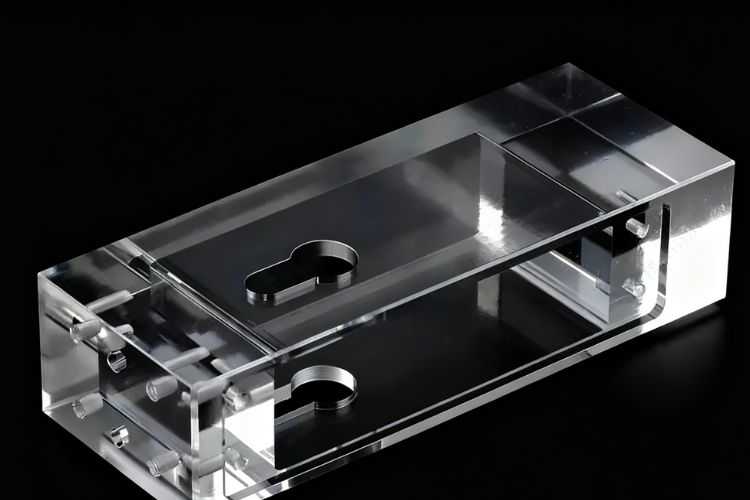
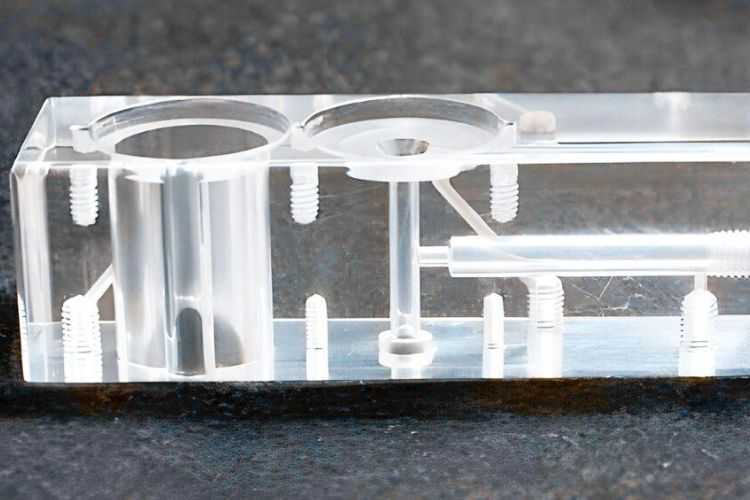
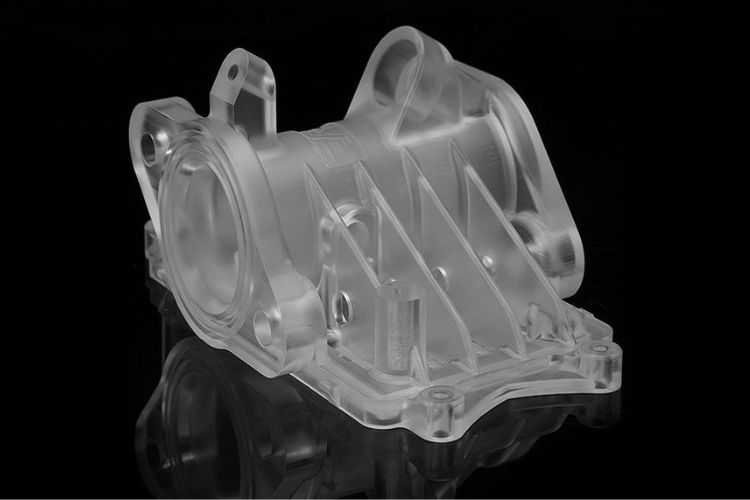
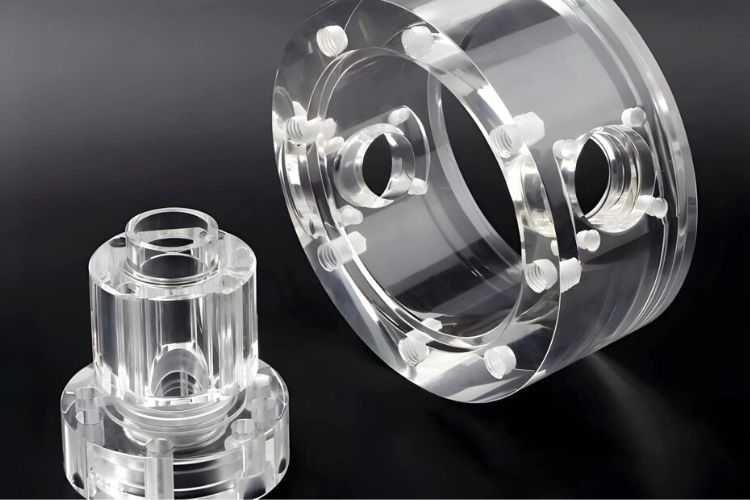
Gallery of Acrylic CNC Machined Parts
Explore some of our completed acrylic machining projects, including transparent housings, polished lenses, LED light guides, and complex milled components.
Häufig gestellte Fragen
Yes, acrylic can crack if cutting parameters are not optimized, but our machining strategy minimizes internal stress and prevents cracking.
We can achieve tolerances up to ±0.02 mm depending on the part geometry and thickness.
Yes. Vapor polishing restores optical clarity and is ideal for parts that require high transparency.
Cast acrylic offers better optical quality and is recommended for precision machining, while extruded acrylic is more economical for general applications.
Yes. We support prototypes, low-volume production, and customized small batch orders.
Tauchen Sie tiefer in unsere Ressourcen ein
For more details, we’ve curated a few recommended pages and articles just for you:
Get A CNC Machining Acrylic Quote!
Beska – Beste Qualität zu wettbewerbsfähigen Preisen.
Wir sind mit unserer Fachkompetenz in der Blechbearbeitung und CNC-Bearbeitung für Sie da.
 German
 English
 Hebrew
 Turkish
 French
 Russian
 Spanish
 Portuguese