


Ceramic materials are used in applications where wear resistance, thermal stability, chemical resistance, or electrical insulation are difficult to achieve with conventional metals and polymers. They are found in components such as pump seals, semiconductor handling equipment, electrical insulators, and high-speed bearing systems.
Ceramics, however, are not a single material with one set of properties. Alumina, zirconia, silicon carbide, and silicon nitride differ significantly in hardness, fracture toughness, thermal conductivity, temperature capability, and manufacturability.
Ceramics include both traditional and advanced material families, but this article focuses mainly on engineering ceramics used for industrial components, including their properties, common types, applications, and manufacturing considerations.
1. What Defines a Ceramic Material?
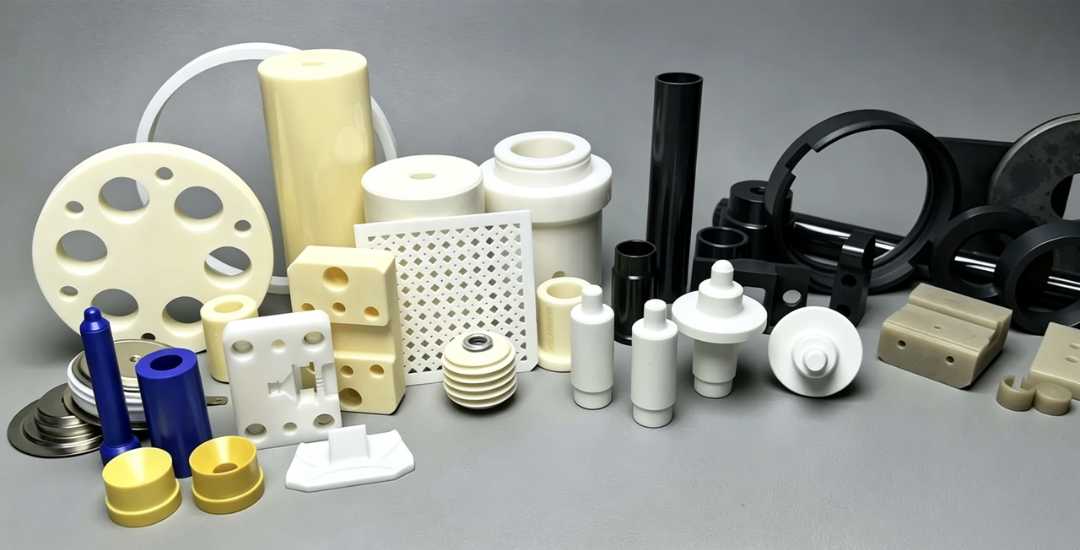
Ceramics are generally inorganic, nonmetallic materials whose structures are dominated by ionic and/or covalent bonding. These bonding characteristics often contribute to high hardness, thermal stability, chemical resistance, and limited plastic deformation before fracture. Their electrical and thermal properties, however, can vary widely between ceramic compositions.
Ceramics are commonly discussed as traditional ceramics and advanced ceramics, also called engineering or technical ceramics. Traditional ceramics include clay-based products such as bricks, tiles, and porcelain. Advanced ceramics use more tightly controlled compositions and processing methods to achieve specific mechanical, thermal, electrical, or chemical properties.
Common engineering ceramics include oxide ceramics such as alumina (Al₂O₃) and zirconia (ZrO₂), carbides such as silicon carbide (SiC), and nitrides such as silicon nitride (Si₃N₄). Many are produced from ceramic powders that are shaped and then densified through sintering or related processes.
2. Why Use Engineering Ceramics Instead of Metals?
Engineering ceramics become attractive when an application requires a combination of high hardness, wear resistance, thermal stability, chemical resistance, or electrical insulation that may be difficult to achieve with conventional metals or polymers.
Many ceramics perform well in abrasive, corrosive, or high-temperature environments. Alumina, for example, is widely used as an electrical insulator and wear material, while silicon carbide combines high hardness with high thermal conductivity. Silicon nitride offers relatively low density together with good thermal-shock resistance.
The main trade-off is brittleness. Most engineering ceramics show little plastic deformation before fracture and are more sensitive than ductile metals to tensile stress, impact, surface flaws, and sharp stress concentrations. Their high hardness also makes precision finishing more difficult once the material has been fully sintered.
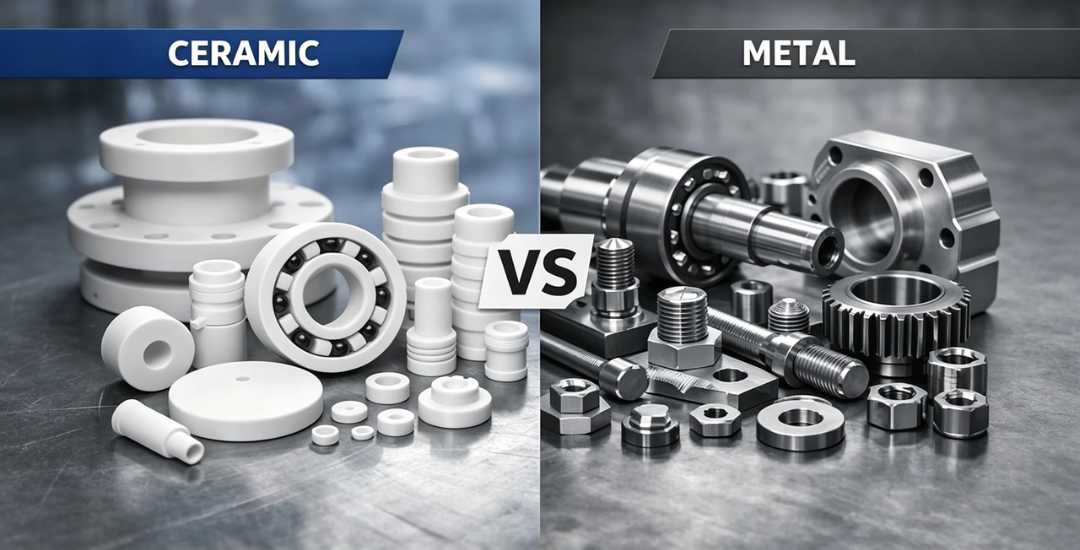
For this reason, ceramic parts often require different design rules from metal components, particularly around corner radii, load direction, joining, impact exposure, and thermal-expansion mismatch.
| Aspekt | Typical Characteristics of Engineering Ceramics |
| Vorteile | High hardness and wear resistance; good thermal stability; strong chemical resistance in many environments; electrical insulation in selected ceramics; relatively low density for some grades |
| Einschränkungen | Brittle fracture; limited plastic deformation; sensitivity to tensile stress and impact; difficult precision finishing after sintering; greater attention required for joining and stress concentrations |
3. Common Types of Engineering Ceramics
Four widely used engineering ceramics are alumina, zirconia, silicon carbide, and silicon nitride. Each offers a different balance of hardness, fracture toughness, thermal behavior, chemical resistance, and manufacturability.
Alumina (Al₂O₃)
Alumina is one of the most widely used engineering ceramics because it combines high hardness, wear resistance, chemical resistance, thermal stability, and electrical insulation at a relatively economical cost.
Alumina is available in different purity grades, and its final properties depend on purity, additives, microstructure, and processing method. Higher-purity grades are commonly selected where chemical resistance, dielectric performance, or contamination control is important.
Common applications include:
- Electrical insulators and electronic components
- Wear rings and sliding components
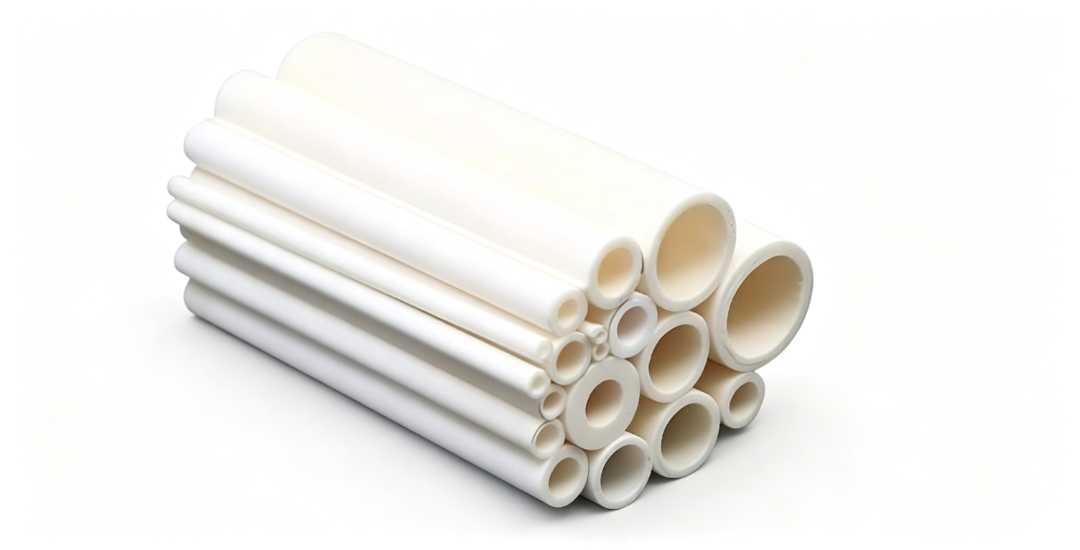
- Ceramic tubes and furnace components
- Semiconductor handling equipment
- Pump and valve components
- Instrument components
Manufacturing consideration: Fully sintered alumina is difficult to machine and is commonly finished by diamond grinding or lapping. Rounded corners and controlled edge geometry can help reduce chipping during machining and handling.
Zirconia (ZrO₂)
Zirconia is distinguished by its relatively high fracture toughness and strength compared with many common engineering ceramics. It also has relatively low thermal conductivity and can achieve very smooth finished surfaces.
Stabilizers such as yttria are used to control zirconia’s crystal structure and mechanical behavior. Yttria-stabilized zirconia (YSZ) is a widely used form in engineering applications.
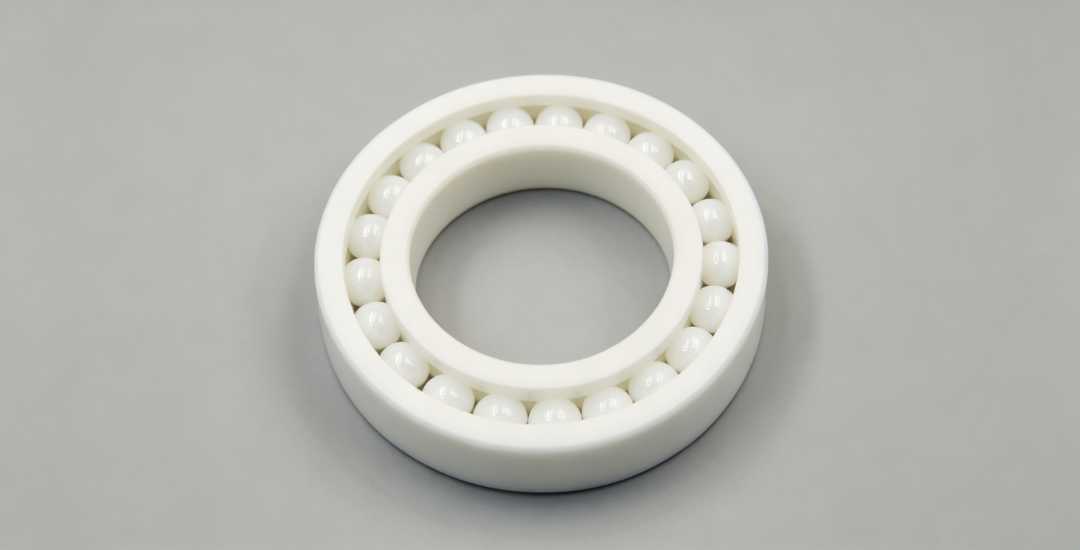
Common applications include:
- Bearing balls
- Valve seats and wear rings
- Pump components
- Cutting tools and blades
- Precision sliding components
- Thermal barrier applications
Silicon Carbide (SiC)
Silicon carbide combines very high hardness, wear resistance, thermal conductivity, and high-temperature capability. These properties make it useful in applications involving abrasion, heat transfer, and chemically demanding environments.
Common applications include:
- Mechanical seal faces
- Pump components
- Semiconductor fixtures and wafer-handling components
- Furnace and kiln components
- Wear liners and nozzles
- High-temperature structural components
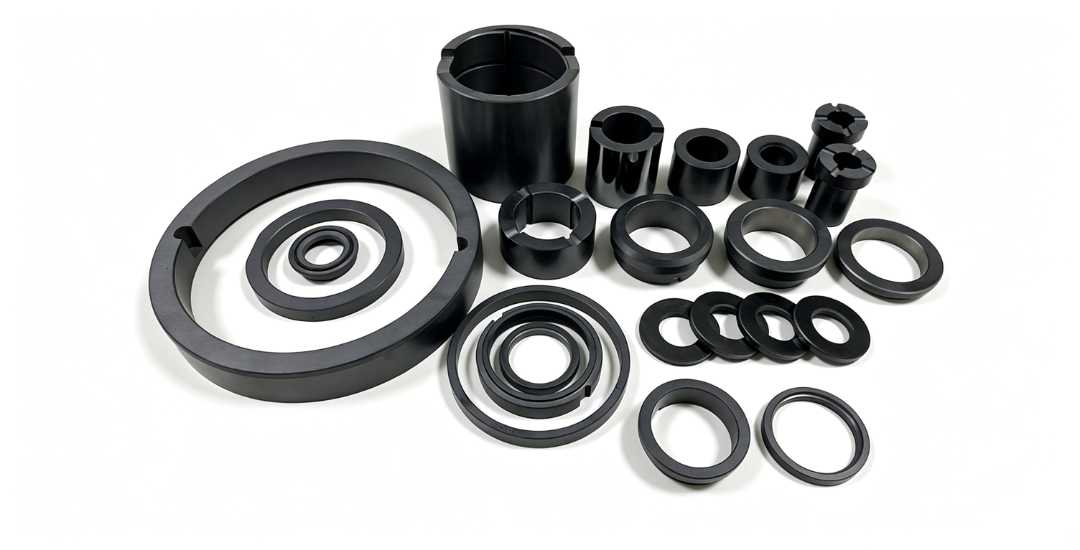
Manufacturing consideration: Fully sintered SiC is extremely difficult to finish-machine. Precision surfaces generally require diamond grinding, and complex geometry can significantly increase manufacturing difficulty and cost.
Silicon Nitride (Si₃N₄)
Silicon nitride combines good fracture toughness, low thermal expansion, relatively low density, wear resistance, and strong thermal-shock performance.
These characteristics make it especially useful where rapid temperature changes or high-speed mechanical loading are important.
Common applications include:
- Bearing balls
- Turbocharger components
- Pump plungers
- Valve components
- Guide bushings
- Semiconductor process components
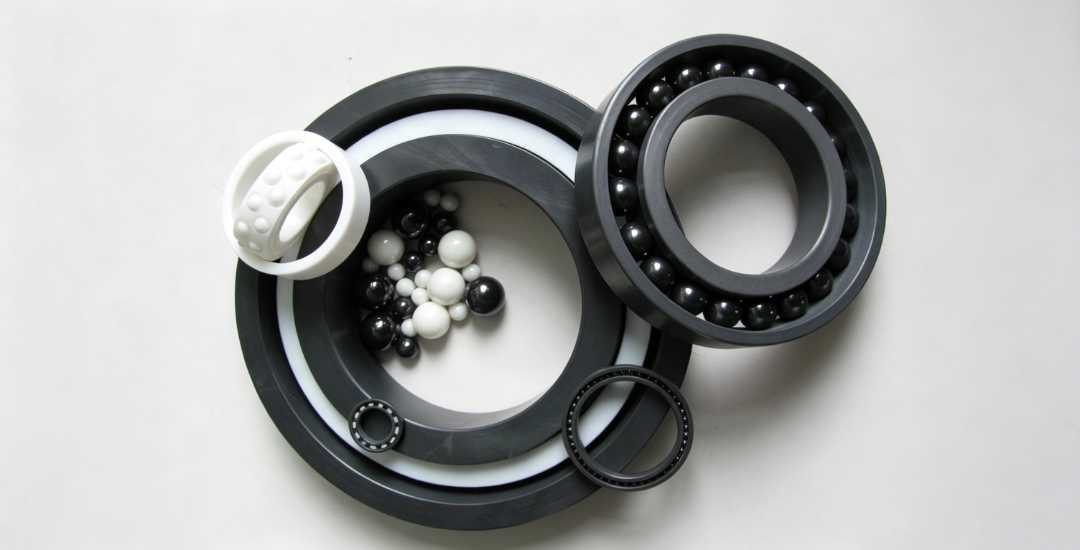
Manufacturing consideration: Dense silicon nitride requires specialized sintering processes, and precision finishing commonly involves diamond grinding. Its relatively high toughness compared with many other ceramics can improve handling resistance, but edge damage and fracture still need to be controlled carefully.
4. Alumina vs. Zirconia vs. Silicon Carbide vs. Silicon Nitride
Alumina, zirconia, silicon carbide, and silicon nitride differ significantly in hardness, strength, fracture toughness, thermal conductivity, and thermal expansion. These differences make each material better suited to different operating conditions.
| Eigentum | Alumina (Al₂O₃) | Zirconia (ZrO₂) | Silicon Carbide (SiC) | Silicon Nitride (Si₃N₄) |
| Typical Hardness (HV) | 1400–1800 | 1200–1400 | 2300–2800 | 1500–1800 |
| Typical Flexural Strength (MPa) | 300–400 | 800–1200 | 400–600 | 800–1000 |
| Typical Fracture Toughness (MPa·m¹/²) | 3–4 | 6–10 | 3–5 | 7–10 |
| Approx. Service Temperature (°C) | ~1700 | ~1500 | ~1600 | ~1400 |
| Thermal Conductivity (W/m·K) | 25–35 | 2–3 | 150–200 | 25–40 |
| CTE (10⁻⁶/K) | 7.2–8.0 | 10–11 | 4.0–4.5 | 2.8–3.2 |
| General Cost Tendency | Untere | Mäßig | Höher | Moderate to Higher |
| Typische Anwendungen | Electrical insulators, wear components, pump parts | Valve seats, bearing balls, cutting components | Mechanical seals, semiconductor fixtures, thermal components | Bearings, turbocharger components, pump plungers |
These values represent typical ranges for commercial grades rather than design limits. Actual properties depend on composition, purity, stabilizer, porosity, processing route, and test conditions.
5. Manufacturing Ceramic Components
Making ceramic parts is very different from machining metal. In most cases, the material is first shaped from ceramic powder, then densified at high temperature, and finally ground or finished to reach the required dimensions and surface quality.
Forming and Sintering
Advanced ceramics are commonly produced from powders that are shaped before sintering. Depending on the part, manufacturers may use dry pressing, isostatic pressing, extrusion, slip casting, or ceramic injection molding.
Simple parts are often easier to form with pressing methods, while more complex geometries may require Spritzguss or other specialized processes. The choice also depends on part size, production volume, and how much machining will be needed after sintering.
Sintering causes the part to shrink as the ceramic becomes denser. If the green body has uneven density, or if the geometry makes shrinkage difficult to control, distortion can occur. This is one reason why critical dimensions are often finished after sintering.
Machining and Finishing
Once fully sintered, engineering ceramics become much more difficult to machine than most metals. Their high hardness and brittleness make edge chipping, surface damage, and subsurface cracking important concerns.
Precision ceramic parts are therefore commonly finished with diamond Schleifen, lapping, or polishing rather than conventional cutting tools. Tight tolerances are possible, but the process becomes more demanding as the geometry gets thinner, sharper, or more complex.
Keeping the part close to its final shape before sintering can reduce the amount of finishing required later, which is especially important for materials such as alumina, silicon carbide, and silicon nitride.
Design Considerations
Ceramic parts also need to be designed differently from ductile metal components.
- Reduce tensile stress where possible. Ceramics generally perform better under compression and are more sensitive to tensile loading.
- Avoid sharp internal corners. Radii and controlled edge transitions help reduce stress concentration and lower the risk of chipping.
- Be cautious with impact loads. Localized or sudden loading can cause cracks to initiate and propagate quickly.
- Consider how the ceramic will be assembled. When ceramics are joined to metals, differences in thermal expansion and stiffness can create additional stress. Mechanical retention, compliant interfaces, adhesives, or brazing may be used depending on the application.
Good ceramic design usually starts before machining. Part geometry, forming method, sintering behavior, and finishing requirements all affect how reliably the component can be manufactured.
6. Typical Applications of Engineering Ceramics
Different ceramic materials are selected for different combinations of wear, temperature, chemical exposure, thermal shock, and dimensional requirements.
| Anwendung | Commonly Used Material | Why It Fits | Manufacturing Consideration |
| Mechanical Seal Faces | Silicon carbide or alumina | High hardness, wear resistance, and chemical resistance | Flatness and surface finish are critical to sealing performance and usually require precision grinding or lapping |
| Semiconductor Handling Components | Alumina | Electrical insulation, stiffness, thermal stability, and suitability for clean or vacuum environments | Large or thin sections can distort during sintering and require careful grinding control |
| Turbocharger Components | Silicon nitride | Low density, thermal-shock resistance, and good high-temperature mechanical performance | Complex geometry and dense ceramic processing make forming, finishing, and inspection demanding |
| Pump Plungers and Wear Components | Silicon nitride or other wear-resistant ceramics | Wear resistance, corrosion resistance, and dimensional stability | Concentricity and surface finish along the working surface need close control |
These applications show why ceramic selection cannot be separated from manufacturing. A material may have the right properties on paper, but part geometry, finishing requirements, and fracture risk still affect whether it is practical to produce.
7. How to Select the Right Ceramic Material
Ceramic selection usually starts with the property that matters most in the application. Cost, toughness, wear, heat transfer, thermal shock, electrical behavior, and component speed can point toward different materials.
| If Your Priority Is… | Commonly Considered Material | Why |
| Lower material and processing cost | Alumina | Widely available with a useful balance of wear, thermal, and electrical properties |
| Higher fracture toughness | Zirconia | Offers relatively high toughness and strength among common engineering ceramics |
| Severe abrasive wear | Silicon carbide | Very high hardness and good wear resistance in many demanding environments |
| High thermal conductivity | Silicon carbide | Transfers heat much more effectively than alumina or zirconia |
| Thermal shock resistance | Silicon nitride | Combines low thermal expansion with relatively good fracture toughness |
| High-speed rotating components | Silicon nitride | Low density helps reduce centrifugal loading |
| Electrical insulation | Alumina | Widely used for its dielectric performance and thermal stability |
| Semiconductor or plasma-facing applications | Alumina or silicon carbide | Selection depends on plasma chemistry, purity, erosion resistance, and contamination requirements |
These are starting points rather than fixed rules. Final material selection should also consider operating temperature, chemical exposure, loading mode, part geometry, required tolerances, and the manufacturing process.
Abschluss
Engineering ceramics offer very different combinations of hardness, fracture toughness, thermal behavior, chemical resistance, and electrical performance. Alumina provides a practical balance of cost and performance, zirconia offers relatively high toughness, silicon carbide combines high hardness with strong thermal performance, and silicon nitride is often considered where thermal shock resistance and low density matter.
Material selection should also account for how the part will be manufactured. Forming method, sintering behavior, machining difficulty, edge geometry, joining, and required tolerances can all affect whether a ceramic is practical for a specific application.
For ceramic components, material choice and part design are best considered together. Beska can support manufacturability review and material discussion based on the part geometry, operating conditions, and production requirements.
 German
 English
 Hebrew
 Turkish
 French
 Russian
 Spanish
 Portuguese