


Stamping and deep drawing both use Blech, presses, and tooling, but they form parts differently. Conventional stamping is better suited to flat, bent, pierced, or shallow features, while deep drawing forms deeper hollow shapes by pulling material into a die cavity.
The key difference is how the material flows during forming. Choosing the wrong process can lead to cracking, wrinkling, excessive thinning, springback, or unnecessary tooling complexity.
This article compares deep drawing and stamping by part geometry, material behavior, tooling, production requirements, and common forming problems.
1. What Is Stamping?

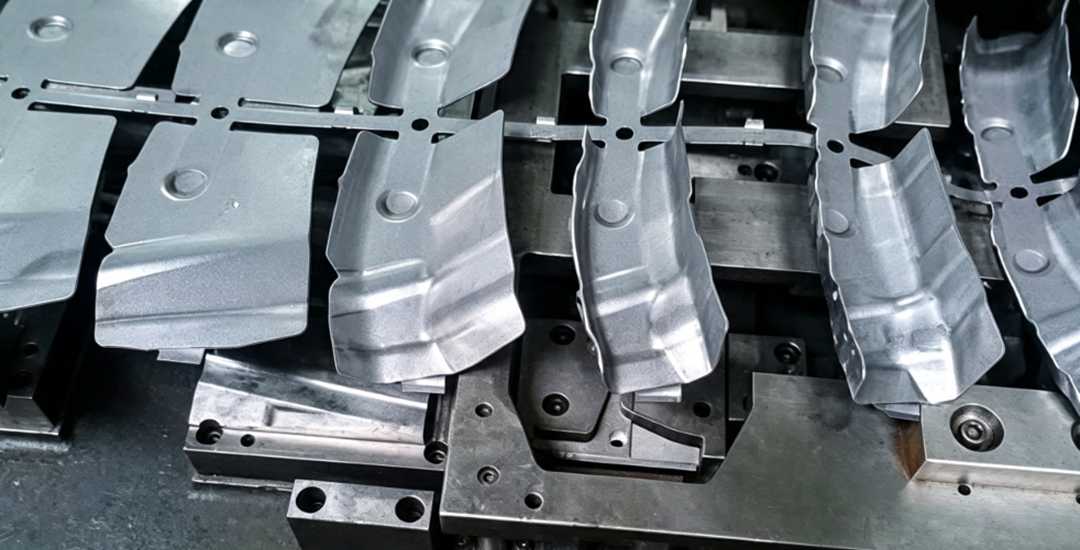
Stamping is a sheet metal manufacturing process that uses a press and dies to cut or form metal into the required shape. It is commonly used for parts such as brackets, covers, terminals, panels, and other relatively flat or shallow components.
During conventional stamping, deformation is usually localized. The sheet may be cut, pierced, bent, or formed, but most of the material remains relatively close to its original plane compared with deep drawing.
Stanzen is generally well suited to parts defined by holes, bends, flanges, and shallow formed features. As part geometry becomes deeper and requires greater material flow into a die cavity, deep drawing may become a more suitable forming method.
2. What Is Deep Drawing?
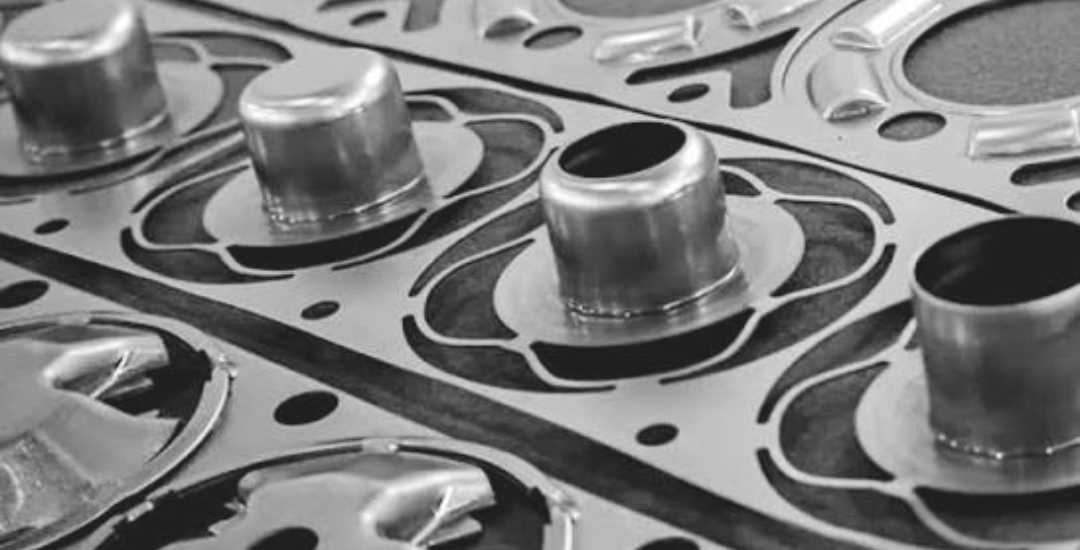
Deep drawing is a sheet metal forming process used to create hollow or three-dimensional parts from a flat blank. A punch pushes the blank into a die cavity while material flows inward from the flange area to form the walls of the part.
Unlike conventional stamping operations that rely mainly on cutting, bending, or localized forming, deep drawing requires significant material flow. This makes factors such as material drawability, blankholder force, tooling radii, and lubrication important to controlling the forming process. Local thinning or thickening may occur depending on the part geometry and how the material flows during the draw.
Deep drawing is commonly used for parts such as cups, cans, housings, shells, and containers where a deeper seamless shape is required. Depending on the geometry, one or multiple drawing stages may be needed to achieve the final form without excessive wrinkling, splitting, or thinning.
3. Deep Drawing vs Stamping: Key Differences
The main difference between conventional stamping and deep drawing is how the sheet metal is deformed. Stamping relies mainly on cutting, bending, and localized forming, while deep drawing requires controlled material flow into a die cavity to create deeper hollow shapes.
| Faktor | Conventional Stamping | Tiefziehen |
| Part geometry | Flat, bent, pierced, or shallow formed parts | Deeper hollow parts such as cups, shells, and housings |
| Material flow | Mostly localized around bends, cuts, and formed features | Significant material flow from the flange into the die cavity |
| Tooling focus | Cutting clearance, bend geometry, feature location, and springback control | Punch and die radii, blankholder control, lubrication, and draw sequence |
| Production considerations | Suitable for a wide range of production volumes depending on tooling type | Tooling and process development become more important as draw depth and geometry complexity increase |
| Common defects | Burrs, springback, edge cracking, dimensional drift | Wrinkling, splitting, excessive thinning, earing, scoring |
Neither process is defined by a single depth or dimensional threshold. The better choice depends on how much material must flow, how the material behaves during forming, the required geometry, and the overall production strategy.
4. What Parts Are Better Suited to Each Process?
The differences in material flow become clearer when they are applied to actual part geometry.
Stamping for Flat, Bent, and Shallow-Formed Parts
Conventional stamping is generally better suited to parts that remain relatively flat or are shaped through bends, flanges, cutouts, and shallow formed features. Brackets, panels, terminals, and covers are common examples because most of the deformation is localized rather than requiring large amounts of material to flow into a deep cavity.
Deep Drawing for Hollow and Deeper-Formed Parts
Deep drawing is more suitable when a part requires a deeper hollow form with continuous walls created from a sheet-metal blank. Battery cans, cookware bodies, and certain metal housings are typical examples because their geometry depends on material flowing progressively into the die cavity during forming.
In practice, the forming route is chosen from the part geometry first, then confirmed against material behavior and tooling feasibility.
5. What Affects Deep Drawing Feasibility?
Deep drawing feasibility depends on how much material must flow, how the sheet responds to deformation, and how well the tooling controls that flow. Part depth alone is not enough to determine whether a draw will be stable.
Draw Ratio and Part Geometry
Draw ratio is a useful indicator of forming severity because it relates the starting blank size to the punch or finished part diameter. As the required draw becomes more severe, the risk of thinning, splitting, or wrinkling increases, and multiple draw stages may be needed.
Geometry also matters beyond overall depth. Corner radii, wall transitions, flange shape, and local section changes can concentrate strain or restrict material flow.
Material Drawability
Material properties strongly influence how the blank stretches and flows during drawing. Yield strength, ductility, work-hardening behavior, and anisotropy all affect forming performance.
The r-value is commonly used to assess resistance to thinning, while the n-value reflects the material’s ability to distribute strain as deformation progresses. Both become more important as the draw becomes more demanding.
Sheet thickness also affects stability. Thinner material may be more sensitive to wrinkling or localized thinning, while thicker material generally requires greater forming force and appropriate tooling conditions.
Tooling and Process Control
Tooling geometry and process settings determine how freely the material can move into the die cavity. Punch and die radii that are too tight can increase local strain, while poor flange control can allow wrinkling or restrict material flow.
Blankholder force must provide enough restraint to control the flange without preventing the material from feeding into the draw. Lubrication also plays a major role by reducing friction, limiting galling and scoring, and helping maintain more consistent material flow.
A part that draws successfully in one material or thickness may require different tooling, process settings, or additional draw stages when those conditions change.
6. Common Manufacturing Problems
Stamping and deep drawing tend to develop different defects because the material is being controlled in different ways. In conventional stamping, problems are often related to cutting quality, bending, and springback. In deep drawing, defects are more closely connected to material flow through the die.
Common Stamping Problems
Burrs can increase as cutting edges wear or when punch-to-die clearance is not appropriate for the material and thickness. Springback occurs after bending or forming as the material elastically recovers, which can shift angles or dimensions from the intended geometry. Edge cracking may also appear when the material is stretched beyond its forming capability or when the cut edge condition is poor.
Controlling these issues usually requires a combination of suitable die clearance, maintained cutting edges, appropriate bend geometry, and compensation for springback where necessary.
Common Deep Drawing Problems
Wrinkling occurs when the flange is not controlled sufficiently as material feeds into the die. Excessive restraint, however, can restrict material flow and increase the risk of splitting or localized thinning.
Earing is linked primarily to directional differences in the sheet material and can produce an uneven rim after drawing. Scoring or galling may develop when friction between the sheet and tooling becomes too high, especially when surface condition or lubrication is inadequate.
These defects are usually controlled by adjusting the forming conditions as a system rather than changing a single parameter. Material properties, blankholder force, tooling radii, lubrication, draw sequence, and tool condition all influence how stable the process will be.
7. How to Choose the Right Process
The choice between conventional stamping and deep drawing is driven mainly by the geometry that must be formed.
Conventional stamping is generally the better fit when the part can be produced through cutting, bending, flanging, and shallow forming. Deep drawing becomes necessary when the geometry requires substantial material flow to create a deeper hollow shape from a flat blank.
For parts that may require deep drawing, the next question is whether the material and geometry can tolerate the required deformation without excessive thinning, splitting, or wrinkling. If the draw is too severe for a single operation, additional drawing stages may be required.
Production volume and tooling cost should be considered only after the forming route is technically feasible. A process that appears cheaper is not the better choice if it cannot produce the required geometry consistently.
Abschluss
Conventional stamping is usually the more direct route for flat, bent, and shallow-formed parts. Deep drawing becomes relevant when the part geometry requires substantial material flow to create a deeper hollow shape.
The important decision is not where a fixed depth ratio falls, but whether the required shape can be formed with stable material flow and a practical tooling strategy.
For new sheet metal projects, reviewing the forming route before tooling is developed can reduce unnecessary tool changes and process corrections later. Beska can support this early manufacturing review from prototype through production.
 German
 English
 Hebrew
 Turkish
 French
 Russian
 Spanish
 Portuguese