


A 316 stainless steel seawater pump failed after 18 months due to pitting. Replacing it with super duplex 2507 cost more upfront but lasted over ten years. This trade‑off is common in marine, oil and gas, and chemical industries.
316 works well in mildly corrosive environments like freshwater and food processing. Super duplex resists pitting and stress corrosion cracking in chlorides and acids.
This article compares the two materials in corrosion resistance, strength, cost, fabrication, and typical applications. You will learn which one fits your corrosive service needs and when the higher price of super duplex makes sense.
1. What is Super Duplex Stainless Steel?
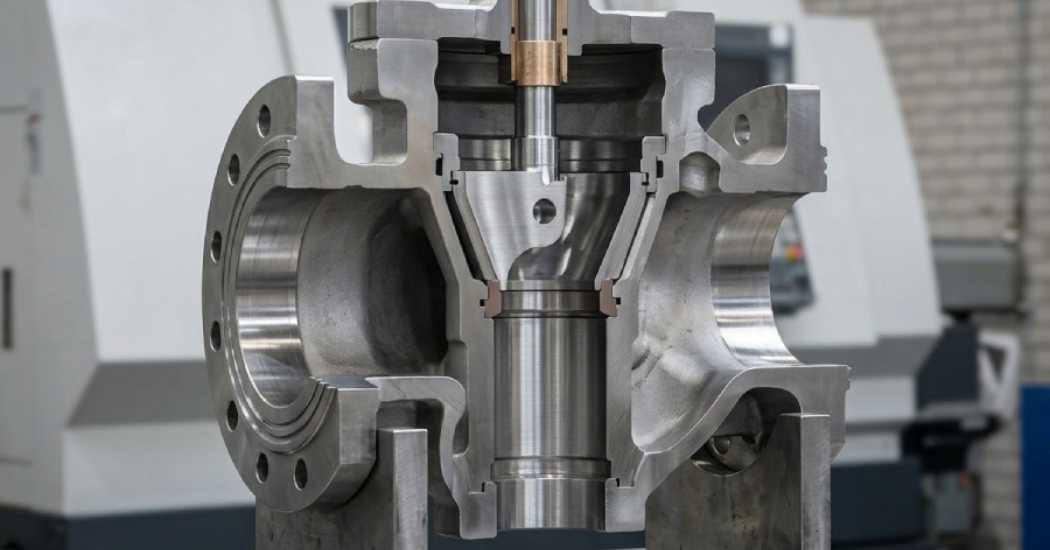
Super duplex stainless steel has a two‑phase microstructure of ferrite and austenite, roughly half each. This structure gives it higher strength and better corrosion resistance than 316 or standard duplex (2205).
Typical grades include UNS S32750 (2507) and UNS S32760. They contain about 25% chromium, 7% nickel, 4% molybdenum, and 0.3% nitrogen. The high chromium and molybdenum form a stable passive film that resists chlorides and acids.
The “super” means its pitting resistance equivalent number (PREN) is above 40. A PREN above 40 indicates the material can handle severe environments like warm seawater or sour gas where 316 would fail quickly.
Compared with 316, super duplex has roughly double the yield strength and much better resistance to localized corrosion. However, it costs more and is harder to machine.
2. What is 316 Stainless Steel?

316 is an austenitic stainless steel containing 16–18% chromium, 10–14% nickel, and 2–3% molybdenum. Compared with 304 stainless steel, the added molybdenum improves resistance to pitting and crevice corrosion, making 316 a common choice for applications exposed to moisture, chemicals, and mildly corrosive environments.
Its combination of corrosion resistance, weldability, and formability has made it one of the most widely used stainless steel grades across industries. Typical applications include food processing equipment, chemical tanks, architectural components, and freshwater handling systems.
However, 316 has its limits. In chloride-rich environments such as warm seawater or stagnant saltwater systems, pitting and crevice corrosion can develop over time, which is one of the main reasons engineers consider duplex or super duplex alternatives.
3. Corrosion Resistance Comparison: Pitting, Crevice, SCC, and Acids

In many applications, both materials can meet the mechanical strength requirements. The real decision often comes down to how well the material can resist pitting, crevice corrosion, stress corrosion cracking, and chemical attack over time.
Corrosion Type | 316 Stainless Steel | Super Duplex Stainless Steel |
|---|---|---|
Pitting in seawater | Low resistance (PREN 20–25) | High resistance (PREN>40) |
Crevice corrosion | Poor in stagnant chlorides | Good, resists well |
Stress corrosion cracking (SCC) | Susceptible in hot chlorides | High resistance |
General acid resistance | Moderate (limited in reducing acids) | Better, especially in organic acids |
The challenge is that corrosion failures are often not visible during the prototype stage. A component may pass initial testing but still develop pitting or crevice corrosion after months of exposure to chlorides.
4. How Much Stronger Is Super Duplex Than 316?
Beyond corrosion resistance, these two materials also differ significantly in strength, hardness, and load-bearing capability. These differences can affect component weight, wall thickness, and overall design flexibility.
Eigentum | 316 Stainless Steel | Super Duplex (2507) |
|---|---|---|
Yield strength (MPa) | 170–240 | 550–650 |
Tensile strength (MPa) | 460–550 | 800–1000 |
Hardness (HB) | ~150 | ~270 |
Toughness at low temperature | Gut | Good (avoid embrittlement) |
Super duplex has roughly two to three times the yield strength of 316. That means you can use thinner walls, saving weight in offshore or pressure vessel designs. But higher strength also means lower ductility and harder machining. 316 stays easier to form and weld, so it’s a better fit for complex shapes and lighter loads.
5. Cost and Availability: Which One Fits Your Budget and Schedule?
Cost is often one of the deciding factors when selecting between 316 stainless steel and super duplex. However, the difference extends beyond raw material price. Material availability, machining time, tooling consumption, and delivery schedules can all affect the total project cost.
5.1 316 Stainless Steel
316 is widely available and relatively economical. Most distributors stock it in common forms such as plate, bar, tube, and sheet, which helps reduce procurement time.
From a manufacturing standpoint, 316 is also easier to machine and fabricate. Cutting tools generally last longer, machining parameters are less restrictive, and production planning is more straightforward. As a result, both material and processing costs remain relatively predictable.
5.2 Super Duplex Stainless Steel
Super duplex requires a higher initial investment. In addition to the higher material price, availability can be more limited depending on the grade, size, and region.
Manufacturing costs are typically higher as well. Its higher strength and work-hardening tendency often lead to lower cutting speeds, increased tool wear, and longer machining cycles. For complex CNC-machined components, the difference in production cost can be more significant than the difference in raw material cost alone.
The price difference between these two materials becomes easier to justify when replacement costs, maintenance requirements, and service interruptions are taken into account.
6. How 316 and Super Duplex Behave During Processing

The way a material cuts, welds, and forms affects your production cost and delivery schedule. Here is what you need to know when working with 316 versus super duplex.
| Manufacturing Factor | 316 Stainless Steel | Super Duplex Stainless Steel |
| Bearbeitbarkeit | Relatively easy to machine | More difficult due to higher strength |
| Cutting Forces | Mäßig | Significantly higher |
| Kaltverfestigung | Mäßig | More prone to work hardening |
| Werkzeugverschleiß | Untere | Höher |
| Recommended Tooling | Standard carbide tools | High-performance coated carbide tools |
| Coolant Requirements | Standard coolant delivery | High-pressure coolant preferred |
| Schweißbarkeit | Exzellent | Requires tighter heat input control |
| Production Cost | Untere | Höher |
For CNC-Bearbeitung projects, the biggest difference is usually not material availability but manufacturing efficiency. While 316 is generally considered a straightforward material to machine, super duplex often requires more attention to tooling, cutting parameters, coolant delivery, and process stability to achieve consistent results.
7. Typical Applications: Where to Use 316 vs Super Duplex
The difference between these two materials becomes easier to understand when looking at the environments they are designed to handle.

316 Stainless Steel
316 is commonly used for food processing equipment, pharmaceutical systems, storage tanks, freshwater pumps and valves, as well as general industrial machinery. Most of these applications involve moisture, cleaning chemicals, or mildly corrosive environments where standard carbon steel would be unsuitable, but the extreme corrosion resistance of super duplex is not required.
Its combination of corrosion resistance, weldability, and availability has made it one of the most widely specified stainless steel grades across a broad range of industrial applications.
Super Duplex Stainless Steel
Super duplex is more commonly found in seawater systems, desalination equipment, offshore oil and gas applications, marine components, and high-chloride chemical processing environments. In these projects, the concern is often not whether corrosion will occur, but how quickly it will occur and how costly a failure would be.
Its combination of high strength and excellent resistance to pitting, crevice corrosion, and stress corrosion cracking makes it suitable for operating conditions where conventional stainless steels may struggle to achieve the required service life.
While both materials offer good corrosion resistance, they are rarely specified for the same operating conditions.
8. How to Choose the Right Material for Corrosive Environments
Choosing between 316 and super duplex depends on five key factors: chloride concentration, operating temperature, mechanical load, required service life, and budget.
Chloride Concentration
In low‑chloride environments such as freshwater or intermittent humidity, 316 is generally sufficient. Continuous exposure to seawater, brackish water, or sour gas demands super duplex to avoid rapid pitting or stress corrosion cracking.
Operating Temperature
Below 50°C, 316 performs adequately in many applications. At higher temperatures, the risk of chloride attack increases significantly, making super duplex the safer choice.
Mechanical Load
Light to moderate loads allow the use of 316. High loads, pressure fluctuations, or fatigue conditions favor the higher strength of super duplex.
Service Life
For short‑term applications or parts that are easy to replace, 316 offers acceptable performance. For long‑term, hard‑to‑access, or safety‑critical components, the extra cost of super duplex is justified by its much longer service life.
Budget
When upfront cost is the main concern, 316 is the economical option. When lifetime cost and reliability are more important, super duplex provides better value despite its higher initial price.
A Simple Rule
If the part is continuously exposed to chlorides such as seawater, brackish water, or sour gas, choose super duplex. For mild or intermittent exposure like freshwater or indoor humidity, 316 is usually sufficient. When uncertain, run a corrosion test or consult a materials engineer.
9. What We Often Discuss When Comparing 316 and Super Duplex
One interesting pattern is that customers rarely ask us to compare 316 and super duplex purely from a machining perspective.
For 316 stainless steel projects, the discussion is usually about cost, lead time, and whether the material is sufficient for the operating environment. Most of these parts come from automation equipment, industrial machinery, food processing equipment, and general engineering applications.
Super duplex inquiries tend to start differently. In many cases, the material has already been specified by the design team because the component will operate in seawater, high-chloride, or highly corrosive environments. The discussion is often less about material price and more about long-term reliability, maintenance intervals, and expected service life.
What surprises many teams is that the decision is not always between 316 and super duplex. Quite often, the real discussion becomes whether 316 is enough, whether duplex 2205 is a better balance, or whether the application genuinely requires the performance of super duplex.
Abschluss
For mild corrosive environments like freshwater or indoor use, 316 stainless steel offers a low‑cost, easy‑to‑fabricate solution. For harsh conditions with continuous chloride exposure, super duplex provides superior corrosion resistance and strength, justifying its higher upfront cost through longer service life and reduced downtime.
At Beska, we have extensive experience machining and fabricating both 316 and super duplex. Our engineering team helps customers select the right material, optimize cutting parameters, and avoid common processing issues. Kontaktieren Sie uns for a consultation or to request a quote.
Tauchen Sie tiefer in unsere Ressourcen ein
Damit Sie einige aufschlussreiche Lektüre finden, haben wir eine Liste mit empfohlenen Artikeln speziell für Sie zusammengestellt:
 German
 English
 Hebrew
 Turkish
 French
 Russian
 Spanish
 Portuguese